
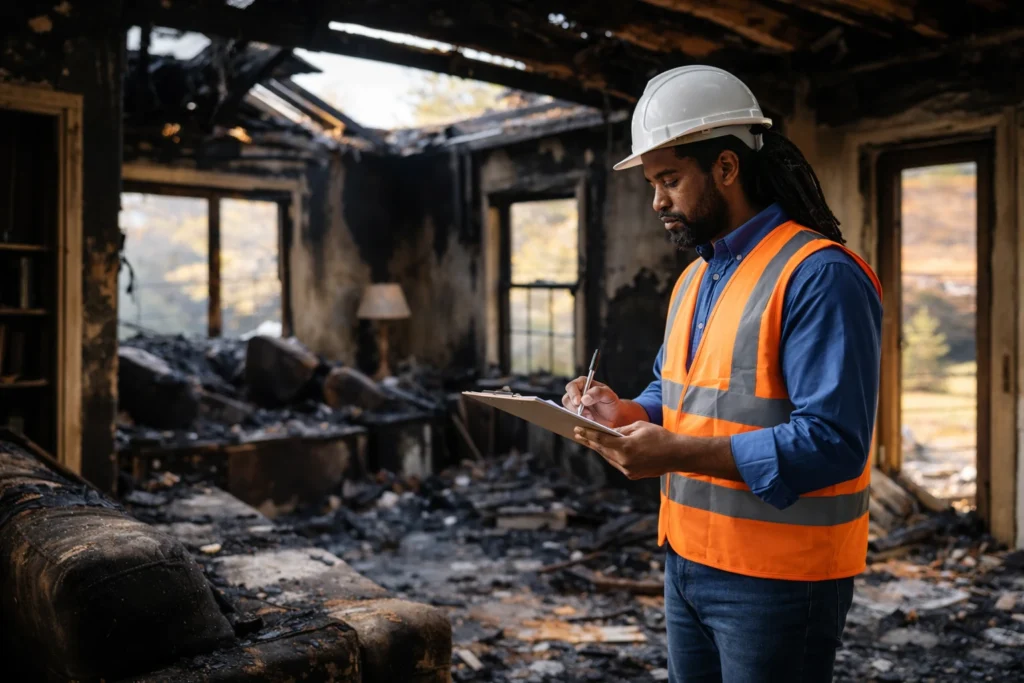
A fire can flip your life upside down in minutes. One moment everything is normal. The next, you’re standing outside watching years of memories disappear. And right when you think the worst is over, the insurance process begins. This is where a fire insurance adjuster enters the picture and trust me, how you handle this part can make or break your financial recovery.
I’ve seen homeowners leave thousands on the table simply because they didn’t understand how the process works. You don’t have to be one of them. Let’s break it down step by step so you can protect your claim, your property, and your peace of mind.
What Is a Fire Insurance Adjuster?
A fire insurance adjuster is the professional responsible for evaluating your fire damage and determining how much your insurance company should pay. Sounds straightforward. But here’s the catch there are different types of adjusters, and they don’t all work for you.
Types of Adjusters You’ll Encounter
- Insurance Company Adjuster
- Works directly for your insurance company
- Their job is to protect the insurer’s financial interests
- Independent Adjuster
- Hired by insurance companies on a contract basis
- Still represents the insurer, not you
- Public Adjuster
- Hired by you, the homeowner
- Works exclusively in your best interest
That difference matters more than most people realize. One is trying to settle your claim efficiently. The other is trying to maximize your payout.
How Fire Insurance Adjusters Work After a Loss
Once you file a claim, the process starts quickly. And it moves fast.
Here’s what typically happens:
Step-by-Step Process
- Initial Contact
- The fire insurance adjuster reaches out within a few days
- They schedule an inspection
- Property Inspection
- They assess visible and hidden damage
- Take photos, notes, and measurements
- Documentation Review
- Your policy is analyzed
- Coverage limits and exclusions are identified
- Estimate Creation
- Repair and replacement costs are calculated
- Settlement Offer
- You receive an initial payout offer
Simple on paper. Complex in reality. Timing also varies. Some claims move in weeks. Others drag on for months especially if there’s a dispute.
Insurance Company Adjuster vs Public Adjuster
This is where things get real. An insurance company’s fire insurance adjuster is not your advocate. They are trained professionals, yes. But their role is to manage claims efficiently for the company. A public adjuster? That’s a different story.
Side-by-Side Comparison
| Factor | Insurance Adjuster | Public Adjuster |
| Who they represent | Insurance company | You (homeowner) |
| Goal | Control claim cost | Maximize payout |
| Negotiation | Limited | Aggressive |
| Fee | Included in policy | Percentage of claim |
Real-World Example
Let’s say your home suffers $120,000 in fire damage.
- Insurance adjuster estimate: $85,000
- Public adjuster re-evaluation: $115,000
That gap isn’t rare. It happens more often than people think.
What a Fire Insurance Adjuster Looks for During Inspection
When the fire insurance adjuster walks your property, they’re not just looking at what’s obvious. They’re trained to assess multiple layers of damage.
Key Areas of Focus
- Structural Damage
- Roof integrity
- Walls and framing
- Foundation stability
- Smoke and Soot
- Penetration into walls and HVAC systems
- Long-term corrosion risks
- Water Damage
- From firefighting efforts
- Mold risk in hidden areas
- Personal Property
- Furniture, electronics, clothing
- Replacement value vs actual value
- Hidden Damage
- Electrical systems
- Insulation contamination
Here’s the problem: if it’s not documented, it often doesn’t get paid.
Common Mistakes Homeowners Make With Fire Insurance Adjusters
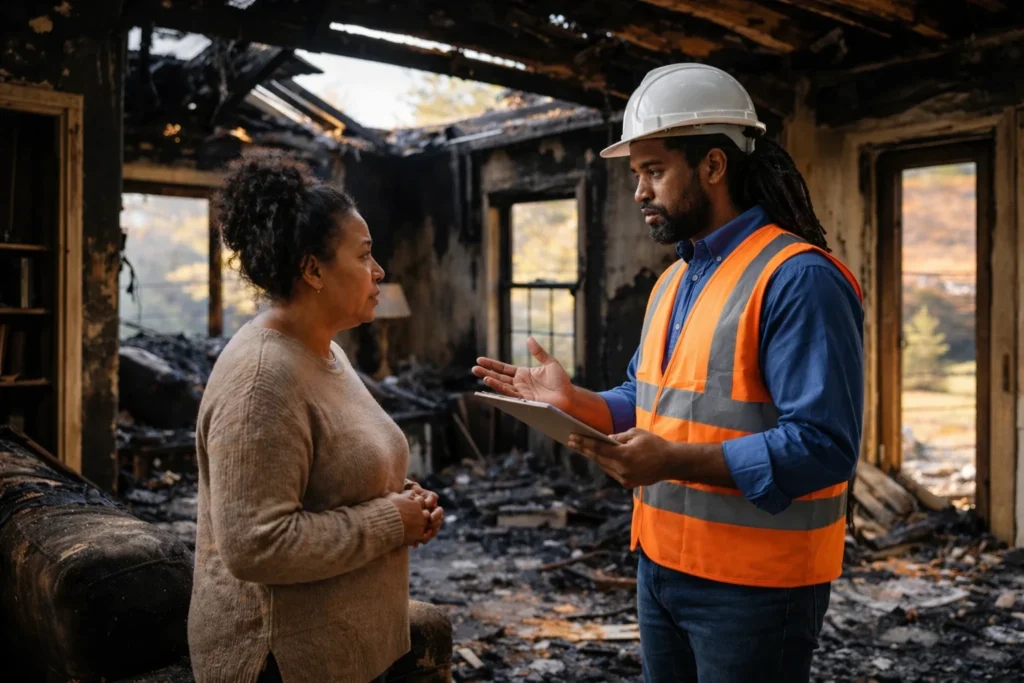
Let me be blunt. These mistakes cost money. Real money.
Avoid These at All Costs
- Accepting the first offer too quickly
- Initial offers are often lower than final potential payouts
- Incomplete documentation
- Missing photos or inventory lists can reduce your claim
- Misunderstanding your policy
- Not knowing coverage limits leads to surprises
- Skipping professional help
- Going solo in complex claims is risky
- Poor communication
- Missed emails or deadlines can delay or weaken your claim
One small mistake can ripple into thousands lost.
How to Prepare Before the Adjuster Arrives
Preparation is your leverage. The more organized you are, the stronger your position.
Your Pre-Inspection Checklist
- Take extensive photos and videos of all damage
- Create a room-by-room inventory
- Save receipts for emergency expenses
- Secure your property if possible
- Review your insurance policy
Questions to Ask Your Fire Insurance Adjuster
- What damages are covered under my policy?
- How are repair costs calculated?
- What documentation do you need from me?
- What is the expected timeline?
Ask smart questions. Get clear answers.
How Fire Insurance Adjusters Calculate Your Claim
This is where numbers get tricky. Two homeowners can have similar damage but receive very different payouts. Why? Because of how claims are calculated.
Key Factors That Affect Your Settlement
- Replacement Cost vs Actual Cash Value
- Replacement cost = full rebuild value
- Actual cash value = depreciated value
- Depreciation
- Older items are valued less
- Policy Limits
- Maximum payout caps
- Labor and Material Costs
- Local pricing can vary significantly
- Scope of Damage
- What is included vs excluded
Insurance calculations can sometimes resemble complex decision frameworks similar to Bayesian inference, where outcomes depend heavily on available data and prior assumptions. While not identical, it highlights how estimates can shift based on interpretation.
Signs Your Fire Insurance Adjuster May Undervalue Your Claim
Not every adjuster undervalues claims. But when it happens, you need to recognize it fast.
Red Flags to Watch For
- Estimates far lower than contractor bids
- Missing items from your damage report
- Quick inspections that feel rushed
- Vague explanations of costs
- Delayed communication
If something feels off, it probably is.
When to Hire a Public Adjuster in Corsicana
Not every claim needs one. But some absolutely do.
Consider Hiring a Public Adjuster If:
- You experienced a total or large loss
- Your claim is delayed or disputed
- The payout feels too low
- You’re overwhelmed by the process
For homeowners in Corsicana, local expertise matters. A public adjuster familiar with regional construction costs and claim patterns can make a significant difference.
The Fire Insurance Claim Timeline: What to Expect
Let’s set realistic expectations.
Typical Timeline Breakdown
| Phase | Timeframe |
| Initial response | 1–3 days |
| Inspection | 1–2 weeks |
| Estimate | 2–4 weeks |
| Negotiation | 2–8 weeks |
| Final payout | 1–3 months |
Delays happen. Especially when documentation is incomplete or disputes arise.
Tips to Maximize Your Fire Insurance Claim

This is where you take control.
Actionable Strategies
- Document everything
- Photos, receipts, emails keep it all
- Get independent estimates
- Contractors can reveal gaps in adjuster reports
- Stay organized
- Track every interaction
- Don’t rush
- Quick settlements often mean lower payouts
- Consider expert help
- A public adjuster can level the playing field
Small actions. Big impact.
Conclusion
A fire changes everything. There’s no way around it. But how you handle the aftermath that’s where you regain control. Understanding how a fire insurance adjuster works gives you an edge. It helps you ask better questions. It helps you spot problems early. And most importantly, it helps you secure the settlement you actually deserve. You don’t have to navigate this alone. Whether you’re dealing with a minor loss or a total rebuild, knowledge is your strongest asset. Use it wisely.
FAQs
A fire insurance adjuster evaluates fire damage, reviews your policy, and determines how much your insurance company should pay for your claim.
Not always insurance company adjusters work for the insurer, while a public adjuster represents your interests.
Most adjusters will reach out within a few days of filing your claim to schedule an inspection.
Yes, you can negotiate the settlement, especially if you have supporting estimates or documentation.
It’s usually best to review it carefully or seek a second opinion, as initial offers can be lower than what you may be entitled to.
You should provide photos, a detailed inventory of damaged items, receipts, and any repair estimates.
Most claims take anywhere from a few weeks to a few months, depending on the complexity and any disputes.
You can dispute the estimate by providing additional documentation or hiring a public adjuster to reassess the claim.
It’s not required, but it can be helpful for large losses, denied claims, or when you feel the settlement is too low.
The value is typically based on either replacement cost or actual cash value, depending on your policy coverage.