
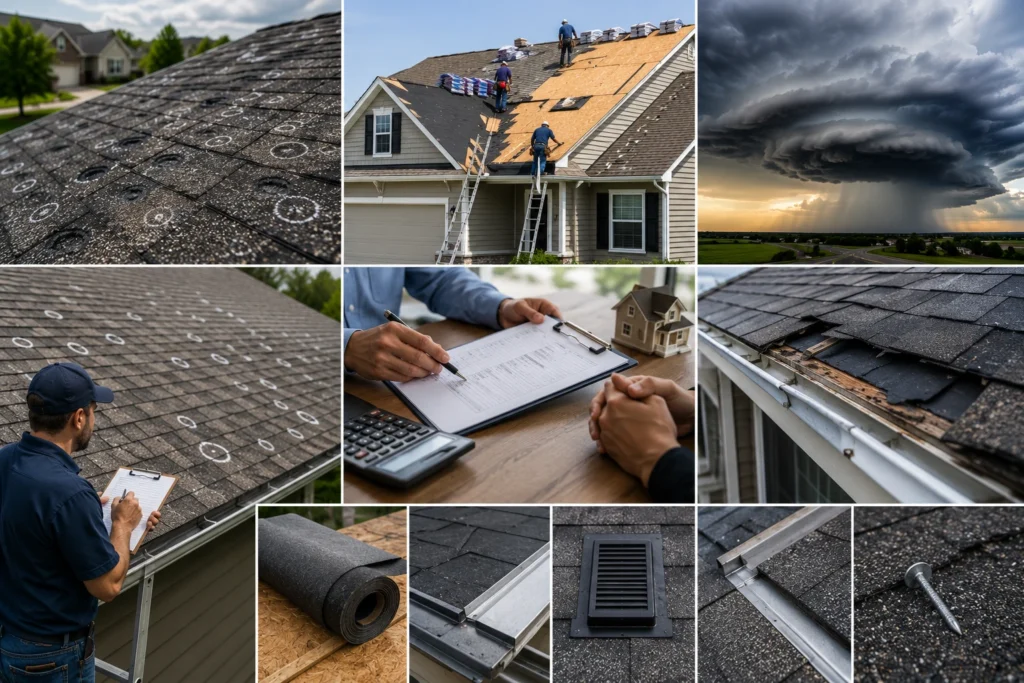
A heavy hail roof insurance claim can quickly become one of the most important financial events a homeowner faces. One severe storm. A few minutes of falling hail. Suddenly, your roof may have thousands of dollars in damage hiding beneath what appears to be a normal surface. Many property owners make the same mistake. They walk around the house, glance at the roof from the driveway, and assume everything looks fine.
Unfortunately, hail damage rarely announces itself that clearly. A roof can suffer significant impacts while appearing relatively normal from the ground. Months later, leaks begin. Shingles deteriorate. Moisture enters the attic. By then, the insurance process can become far more complicated than it needed to be. Understanding how a heavy hail roof insurance claim works can help you avoid costly mistakes, protect your property, and maximize the settlement you deserve.
Understanding Heavy Hail Roof Damage
Not all hailstorms are created equal. Small hail may bounce harmlessly off many roofing materials. Large hail, however, is a completely different story. The speed, size, density, and angle of impact all influence how much damage occurs.
What Qualifies as Heavy Hail?
Insurance companies and meteorologists often categorize hail according to diameter.
| Hail Size | Approximate Comparison |
| 0.25 inch | Pea |
| 0.75 inch | Penny |
| 1 inch | Quarter |
| 1.5 inches | Ping Pong Ball |
| 2 inches | Hen Egg |
| 2.5+ inches | Tennis Ball |
The larger the hailstone, the greater the potential damage. However, size alone does not determine severity. Wind speed matters as well. Even moderate hail can cause significant roof damage when driven by strong storm winds.
Common Types of Roof Damage Caused by Hail
Many homeowners expect obvious holes or missing shingles. In reality, damage often appears much more subtle.
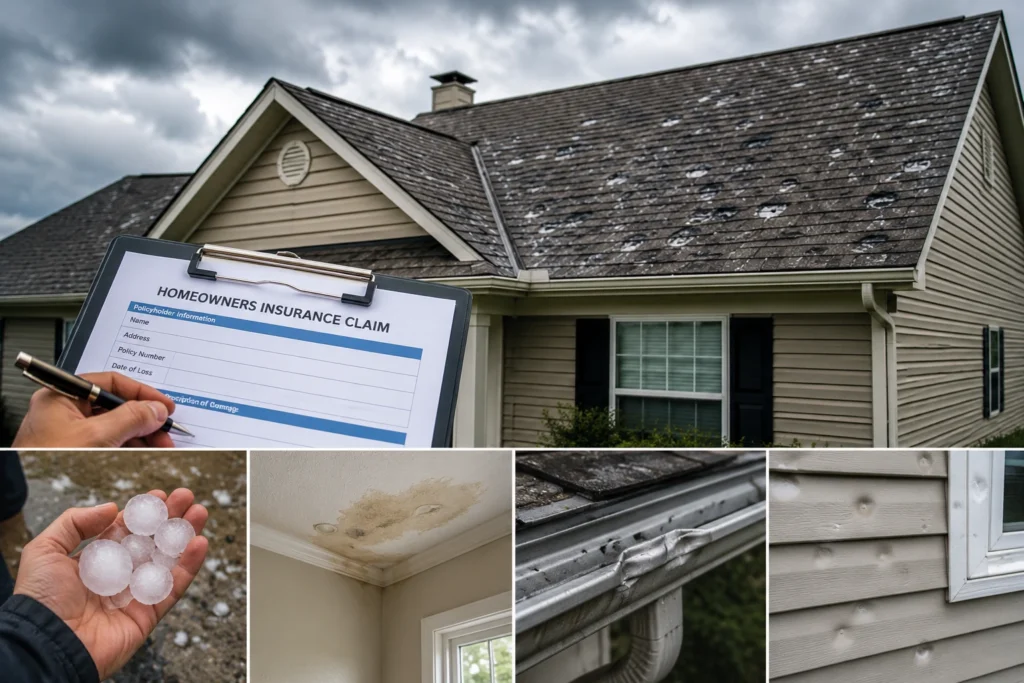
Common forms of hail damage include:
- Granule loss
- Shingle bruising
- Cracked asphalt shingles
- Fractured fiberglass matting
- Dented flashing
- Damaged ridge caps
- Compromised vents
- Gutter dents
- Downspout damage
Each of these issues can shorten the lifespan of your roofing system.
Hidden Damage Many Homeowners Miss
Some of the most expensive hail-related problems remain invisible during a casual inspection.
For example:
- Damaged underlayment
- Small punctures
- Moisture intrusion
- Weakened shingle integrity
- Accelerated aging
These conditions may not produce leaks immediately. Instead, they create future problems that emerge months or even years later. That is why professional inspections play such an important role in any heavy hail roof insurance claim.
Does Homeowners Insurance Cover Hail Damage?
In most cases, yes. Hail damage is typically considered a covered peril under standard homeowners insurance policies. However, coverage is rarely as simple as many people assume.
Typical Coverage for Roof Hail Damage
Most policies cover:
- Roof repairs
- Roof replacement
- Interior water damage resulting from hail
- Damaged gutters
- Damaged siding
- Damaged vents
- Damaged skylights
Coverage depends on the policy language, deductible structure, and condition of the roof before the storm occurred.
Situations Where Coverage May Be Limited
Insurance policies often contain restrictions. Some examples include:
| Potential Limitation | Impact on Claim |
| Roof age restrictions | Reduced payout |
| Actual Cash Value policies | Depreciation deducted |
| Cosmetic damage exclusions | Limited reimbursement |
| Prior damage | Coverage disputes |
| Maintenance issues | Potential denial |
Many homeowners discover these limitations only after filing a claim. That can create unpleasant surprises.
Replacement Cost vs Actual Cash Value
This distinction matters tremendously. Replacement Cost Value (RCV) coverage generally pays the amount necessary to restore the damaged roof with comparable materials. Actual Cash Value (ACV) coverage deducts depreciation.
Consider this example:
| Coverage Type | Roof Value |
| New Roof Cost | $20,000 |
| Depreciation | $8,000 |
| ACV Settlement | $12,000 |
| RCV Settlement | $20,000 |
The difference can be substantial. Before filing a claim, review your policy carefully.
Signs You May Have a Valid Heavy Hail Roof Insurance Claim
Many homeowners wonder whether their damage justifies filing a claim. Certain warning signs should never be ignored.
Exterior Warning Signs
Look for:
- Dented gutters
- Damaged metal flashing
- Missing granules
- Soft spots on shingles
- Cracked shingles
- Damaged roof vents
Even small dents on metal surfaces can indicate significant roof impacts.
Interior Warning Signs
Inside the home, watch for:
- Ceiling discoloration
- Water stains
- Attic moisture
- Damp insulation
- Mold growth
- Peeling paint
Water often enters gradually. By the time stains become visible, damage may already be extensive.
Why Professional Inspections Matter
Roofing contractors and public adjusters often identify damage that homeowners miss. They understand impact patterns. They know where hidden problems occur. Most importantly, they can document findings in a way that strengthens your claim.
What To Do Immediately After a Hailstorm

The first few days after a storm often determine how smoothly a claim progresses. Act quickly. Act carefully. And document everything.
Prioritize Safety
Never climb onto a roof immediately after a hailstorm. Wet surfaces create serious hazards.
Instead:
- Stay on the ground
- Use binoculars if available
- Look for visible exterior damage
- Wait for professional inspection when necessary
Safety always comes first.
Document Everything
Strong documentation strengthens claims.
Take photographs of:
- Roof surfaces
- Gutters
- Downspouts
- Siding
- Windows
- Vehicles
- Outdoor equipment
Capture wide-angle and close-up images. The more evidence you have, the better.
Save Weather Information
Weather data often becomes valuable evidence.
Keep records of:
- Storm dates
- Local weather reports
- Hail size reports
- Radar information
Insurance carriers frequently review these records during investigations.
Prevent Additional Damage
Insurance policies generally require homeowners to mitigate further loss.
Examples include:
- Installing temporary tarps
- Covering exposed areas
- Removing water from interiors
- Protecting personal property
Save every receipt. Reimbursement may be available.
Notify Your Insurance Company
Prompt reporting demonstrates diligence.
Provide:
- Date of loss
- Description of damage
- Contact information
- Initial photographs
Avoid making assumptions about the extent of damage during the initial report. Simply provide known facts.
Step-by-Step Heavy Hail Roof Insurance Claim Process
Many homeowners feel overwhelmed by the claims process. Breaking it into manageable steps helps tremendously.
Step 1: Schedule a Professional Roof Inspection
Independent inspections often reveal damage that property owners cannot identify themselves.
Inspectors typically document:
- Impact locations
- Shingle bruising
- Granule loss
- Metal damage
- Water intrusion
Detailed reports become valuable claim evidence.
Step 2: File Your Claim
Once damage is confirmed, contact your insurer.
Prepare:
- Policy information
- Inspection findings
- Photographs
- Weather records
Organization matters.
A well-documented claim often progresses more efficiently.
Step 3: Meet the Insurance Adjuster
The insurance company will typically assign an adjuster to inspect the property.
During this inspection:
- Be present if possible
- Provide documentation
- Ask questions
- Take notes
Never assume the adjuster observed every area of concern. Documentation remains essential.
Step 4: Review the Insurance Estimate
This step is frequently overlooked. Many homeowners receive an estimate and immediately accept it. Instead, review it carefully.
Compare:
- Scope of work
- Material quantities
- Labor costs
- Roofing components
- Code requirements
Missing items can significantly affect settlement value.
Step 5: Complete Necessary Repairs
Once settlement terms are finalized, repair work can begin. Select qualified contractors. Request written contracts. Keep records throughout the project.
Step 6: Final Settlement
Depending on your policy, additional payments may become available after repairs are completed.
Maintain copies of:
- Invoices
- Completion certificates
- Receipts
- Contractor communications
These documents support final reimbursement requests.
Common Reasons Heavy Hail Roof Insurance Claims Are Underpaid
Unfortunately, underpayments occur more often than many homeowners realize. Several factors contribute to this issue.
Incomplete Damage Assessments
Adjusters work under significant time constraints. As a result, certain damages may be overlooked.
Commonly missed items include:
- Underlayment damage
- Flashing replacement
- Vent replacement
- Ridge cap replacement
Even small omissions can add thousands of dollars to repair costs.
Overlooked Roofing Components
A roof system includes much more than shingles. Components often missed during inspections include:
- Ice barriers
- Drip edges
- Starter strips
- Flashing systems
- Ventilation systems
Every component matters when calculating repair costs.
Disputed Scope of Damage
Insurers and contractors occasionally disagree regarding:
- Repairability
- Replacement requirements
- Material matching
- Building code compliance
These disputes can significantly impact settlement amounts.
Depreciation Issues
Depreciation calculations sometimes become contentious. Incorrect assumptions regarding roof age, condition, or lifespan can reduce payouts unnecessarily.
Careful review remains critical.
Insufficient Documentation
Weak documentation creates opportunities for disputes. Strong evidence creates clarity. The difference can be substantial. One overlooked photograph or missing report can affect thousands of dollars in settlement value. Before accepting any offer, ensure the entire scope of storm-related damage has been identified and documented.
Insurance Company Tactics Homeowners Should Understand
Most insurance companies strive to handle claims fairly. However, it is important to remember that insurance carriers are businesses. Their goal is to evaluate claims based on policy language while controlling costs. That reality makes it essential for homeowners to understand how claims are evaluated.
Low Initial Settlement Offers
Many claims begin with an initial estimate that may not capture the full scope of damage.
This can happen for several reasons:
- Limited inspection time
- Missed roofing components
- Incomplete measurements
- Differences in repair methodologies
As a result, homeowners should never assume the first estimate is automatically the final word. Review every line item carefully.
Cosmetic Damage Arguments
Some insurers may argue that certain hail impacts are cosmetic rather than functional.
For example:
| Damage Type | Potential Insurance Position |
| Metal dents | Cosmetic only |
| Granule loss | Normal wear |
| Minor shingle marks | No functional impairment |
| Gutter dents | Appearance issue |
However, cosmetic damage can sometimes indicate broader impact-related problems. This is where independent inspections become valuable.
Delayed Claim Processing
Delays can occur for many reasons.
Common examples include:
- Additional documentation requests
- High claim volume after storms
- Coverage investigations
- Engineering reviews
While some delays are unavoidable, homeowners should maintain regular communication and document every interaction.
Partial Roof Replacement Recommendations
One of the most common disputes involves repair versus replacement. An insurer may recommend replacing only a section of the roof. The homeowner or contractor may believe the entire roofing system requires replacement.
Factors that influence these decisions include:
- Roof age
- Material availability
- Matching concerns
- Building code requirements
- Extent of hail impacts
Understanding these factors helps property owners make informed decisions.
Requests for Extensive Documentation
Documentation is normal. Excessive requests can sometimes slow claim progress.
Maintain organized records from the beginning, including:
- Inspection reports
- Photographs
- Weather data
- Contractor estimates
- Receipts
- Communication logs
Organization often becomes a homeowner’s greatest advantage.
How to Strengthen Your Hail Damage Insurance Claim
A strong claim rarely happens by accident. It happens through preparation.
Keep Detailed Records
Create a dedicated claim folder.
Store:
- Photos
- Videos
- Inspection reports
- Emails
- Letters
- Estimates
Every piece of information may become useful later.
Obtain Independent Inspections
A second opinion often reveals overlooked damage.
Independent professionals can provide:
- Detailed reports
- Measurements
- Damage mapping
- Repair recommendations
This information strengthens negotiations when disagreements arise.
Save Every Receipt
Expenses add up quickly after a storm.
Examples include:
- Emergency tarping
- Temporary repairs
- Water mitigation
- Property protection measures
Without receipts, reimbursement becomes much more difficult.
Maintain a Claim Journal
One of the most effective claim tools costs almost nothing. A notebook. Or a digital document.
Record:
- Dates
- Times
- Phone calls
- Names
- Promises
- Inspection visits
Details that seem insignificant today may become critical later.
Review Every Estimate Carefully
Compare estimates side by side.
Ask questions such as:
- Are all damaged components included?
- Are local labor costs accurate?
- Are code upgrades addressed?
- Are material quantities correct?
Careful review often uncovers discrepancies.
The Role of a Public Adjuster in a Heavy Hail Roof Insurance Claim
Many homeowners have never worked with a public adjuster. That is understandable. Most people never need one until they face a significant property loss.
What a Public Adjuster Does
A public adjuster represents the policyholder. Not the insurance company.
Their responsibilities may include:
- Damage evaluation
- Claim documentation
- Policy review
- Estimate preparation
- Settlement negotiations
Their focus is helping homeowners pursue the full benefits available under the policy.
How Public Adjusters Differ From Insurance Adjusters
The distinction is important.
| Type of Adjuster | Represents |
| Insurance Adjuster | Insurance Company |
| Independent Adjuster | Insurance Company |
| Public Adjuster | Policyholder |
Many homeowners assume all adjusters work for them. That is not always the case. Understanding this difference can dramatically change how a claim is approached.
Benefits of Professional Claim Representation
Large hail losses often involve complicated evaluations.
Professional representation may help:
- Identify overlooked damage
- Interpret policy language
- Challenge inaccurate estimates
- Organize documentation
- Improve claim efficiency
This is where many homeowners begin learning The Truth About Public Adjusters. They are not contractors and they are not attorneys. Instead, they specialize in property insurance claims and advocate directly for policyholders throughout the settlement process.
When Hiring a Public Adjuster Makes Sense
Not every claim requires representation. However, homeowners often consider assistance when:
- Claims are denied
- Settlements appear too low
- Significant roof damage exists
- Multiple structures are affected
- Disputes arise regarding scope or pricing
For large losses, professional guidance can provide valuable peace of mind.
Why Many Property Owners in Corsicana Turn to Public Adjusters
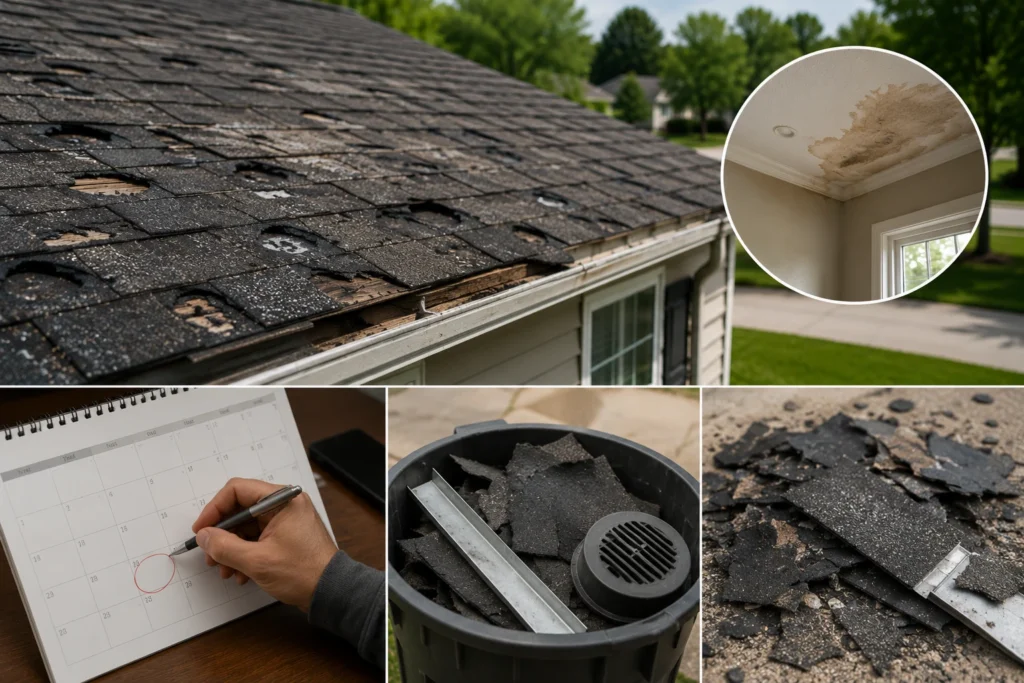
Major hailstorms can affect entire neighborhoods. Following widespread storm damage, contractors, adjusters, inspectors, and insurance representatives may all be evaluating hundreds of properties simultaneously. Because of this, many homeowners in Corsicana seek independent claim assistance to ensure their property receives a thorough review.
Understanding Roof Replacement vs Roof Repair Decisions
One of the largest financial questions in any heavy hail roof insurance claim involves determining whether repairs are sufficient. Sometimes they are. Sometimes they are not.
Factors Affecting Repairability
Several factors influence repair decisions:
- Extent of impacts
- Roof age
- Material condition
- Shingle availability
- Manufacturer requirements
Each property presents unique circumstances.
When Full Replacement Is Necessary
Replacement may become appropriate when:
- Damage is widespread
- Matching materials are unavailable
- Structural integrity is compromised
- Repair costs approach replacement costs
The goal should always be restoring the roof to a functional condition.
Insurance Considerations
Insurance companies evaluate:
- Scope of damage
- Policy language
- Depreciation
- Local building requirements
These evaluations ultimately influence settlement recommendations.
Building Code Requirements
Building codes change over time. In some situations, repairs may trigger code-related upgrades.
These requirements can affect:
- Underlayment
- Ventilation
- Flashing
- Fasteners
Ignoring code requirements can create future complications.
Texas-Specific Considerations for Hail Damage Claims
Texas consistently ranks among the nation’s most active hail regions. Property owners face unique challenges because of this reality.
Texas Weather Risks
The state’s weather patterns create ideal conditions for severe hail development. Large hail can occur with little warning.
When it does, damage can spread across entire communities within minutes. Many of these storms develop from highly organized atmospheric systems. For homeowners interested in the science behind severe weather formation, understanding a Mesoscale Convective System can provide insight into how large storm complexes capable of producing destructive hail often develop and travel across Texas. These powerful weather events are one reason hail damage claims remain so common throughout the state.
Claim Deadlines Matter
Policies typically contain reporting requirements. Waiting too long can create problems.
Potential consequences include:
- Coverage disputes
- Evidence deterioration
- Delayed inspections
- Repair complications
Prompt action remains one of the best ways to protect your claim.
Policy Interpretation Issues
Insurance policies are contracts. Every word matters.
Coverage decisions often depend on:
- Definitions
- Exclusions
- Endorsements
- Settlement provisions
Reading the policy carefully helps homeowners understand their rights and responsibilities.
Importance of Fast Documentation
Storm evidence fades quickly. Contractors begin repairs. Properties change. Weather creates new damage. Documenting conditions immediately after the storm creates a stronger foundation for any heavy hail roof insurance claim.
Why Homeowners in Corsicana Should Act Quickly
After severe weather events, roofing companies and insurance professionals often experience overwhelming demand. Property owners in Corsicana who schedule inspections early frequently gain a clearer understanding of their damages before repair schedules become crowded.
Mistakes That Can Hurt Your Roof Insurance Claim
Many claim problems are avoidable. Unfortunately, homeowners often discover mistakes only after settlement discussions begin.
Waiting Too Long to Report Damage
Time matters. The longer damage remains unreported, the more difficult it may become to establish causation. Prompt reporting protects your position.
Making Permanent Repairs Too Soon
Emergency repairs are often necessary. Permanent repairs should generally wait until damage has been documented thoroughly. Otherwise, important evidence may disappear.
Throwing Away Evidence
Damaged materials can become valuable claim evidence.
Examples include:
- Broken shingles
- Damaged flashing
- Impacted vents
Preserve materials whenever practical.
Accepting the First Settlement Without Review
The first offer may be accurate. Or it may not.
Always review:
- Scope
- Pricing
- Materials
- Quantities
A careful review can prevent costly surprises.
Failing to Understand the Policy
Insurance policies contain critical information regarding:
- Deductibles
- Coverage limits
- Exclusions
- Settlement methods
Understanding these provisions helps homeowners make informed decisions.
Conclusion
A heavy hail roof insurance claim involves far more than filing paperwork and waiting for a check. Successful outcomes depend on preparation. They depend on documentation. And they depend on understanding the process from beginning to end. The strongest claims often share common characteristics. The damage was documented quickly. Professional inspections were completed. Records were organized. Estimates were reviewed carefully. Questions were asked. Most importantly, homeowners remained actively involved throughout the process. Whether your property has minor shingle impacts or significant structural concerns, taking the right steps after a storm can protect both your home and your financial recovery.
For homeowners facing roof damage after severe weather, a well-prepared heavy hail roof insurance claim can make the difference between a frustrating experience and a fair settlement. In communities such as Corsicana, where severe storms can strike with little warning, understanding the claims process before disaster occurs is one of the smartest investments a property owner can make. A major storm may last only minutes. The insurance process, however, can last weeks or months. By documenting damage thoroughly, reviewing estimates carefully, and seeking professional guidance when necessary, homeowners place themselves in the strongest possible position to achieve a fair outcome. When handled properly, a heavy hail roof insurance claim becomes less about navigating obstacles and more about restoring your property with confidence.
FAQs
Common signs include dented gutters, granule loss, cracked shingles, and damaged flashing. A professional roof inspection can identify hidden damage that may not be visible from the ground.
The deadline varies by policy and insurer. It is best to report damage as soon as possible after the storm to avoid delays or coverage disputes.
Most standard homeowners insurance policies cover hail damage, provided the damage is not excluded and the loss is reported according to policy requirements.
Yes, but the age of the roof may affect how the insurance company calculates payment. Some policies apply depreciation or limit coverage for older roofs.
Only perform temporary repairs necessary to prevent further damage. Permanent repairs should generally wait until the damage has been fully documented and inspected.
You can request a reinspection, obtain independent estimates, or seek assistance from a public adjuster if you believe important damage was overlooked.
No. Some roofs can be repaired successfully, while others require full replacement depending on the extent of the damage, roof age, and material availability.
Save photographs, inspection reports, repair estimates, receipts, emails, and notes from conversations with insurance representatives.
Yes. Claims may be denied because of policy exclusions, insufficient evidence, late reporting, or disputes regarding the cause of damage.
For large, complex, or disputed claims, a public adjuster may help identify overlooked damage, organize documentation, and negotiate on your behalf.