
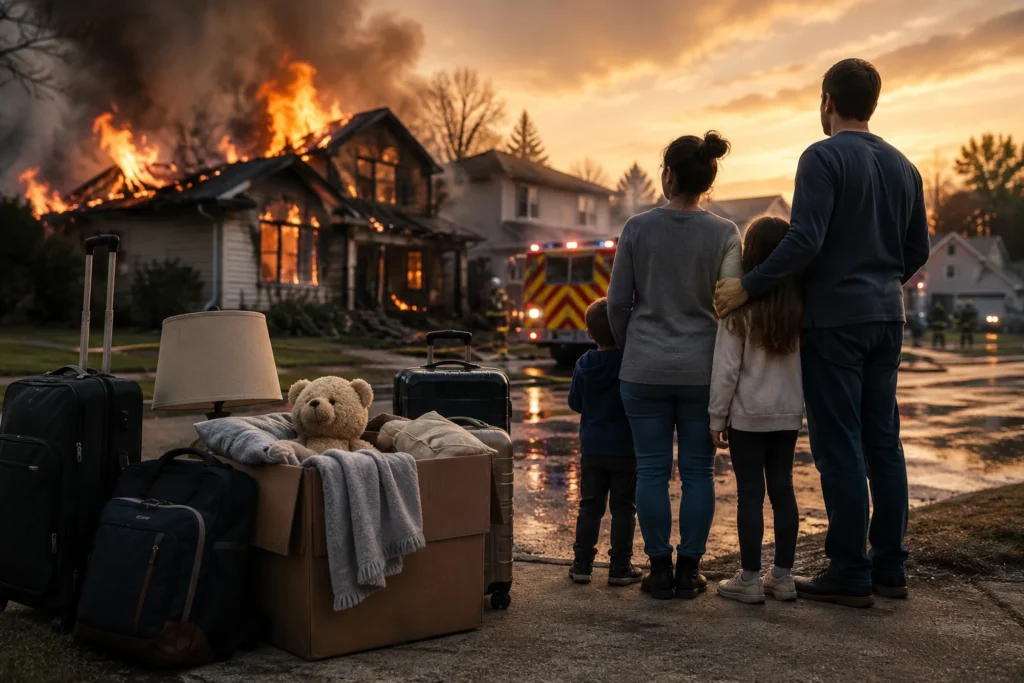
A house fire can turn life upside down in a matter of minutes. One moment you are enjoying a normal evening at home. The next, you are standing outside watching emergency crews work while wondering where your family will sleep, what belongings can be saved, and how much the recovery process will cost. During this difficult time, many homeowners focus on repairing the property itself. That is understandable. The damage is visible. Burned walls, smoke-stained ceilings, and water-soaked flooring are impossible to ignore.
However, one of the most valuable parts of many insurance policies is often overlooked: Additional Living Expenses After a Fire. When a home becomes uninhabitable because of a covered fire loss, insurance may help pay for the extra costs of living somewhere else while repairs are completed. These expenses can include temporary housing, food, transportation, storage, pet care, and more.
Unfortunately, many policyholders do not fully understand how Additional Living Expenses After a Fire work. As a result, they may leave thousands of dollars in benefits unclaimed. Whether the fire is small or catastrophic, understanding your rights can help protect your finances and reduce stress during recovery. For homeowners in Corsicana, knowing how ALE coverage works before disaster strikes can make a significant difference when navigating a fire insurance claim.
What Are Additional Living Expenses After a Fire?
Additional Living Expenses, often referred to as ALE, are benefits within many homeowners insurance policies designed to cover increased costs that arise when a home cannot be occupied after a covered loss. The key concept is simple. Insurance is not necessarily paying for every expense you incur. Instead, it is generally paying for the difference between your normal living expenses and the higher expenses caused by the fire.
For example, if your family normally spends $900 per month on groceries but now spends $1,500 because you are living in a hotel without a kitchen, the additional $600 may qualify for reimbursement. Similarly, if you must rent a temporary home while repairs are underway, that rental expense may qualify under ALE coverage.
The purpose of Additional Living Expenses After a Fire is to help maintain a reasonable standard of living while your home is being repaired or rebuilt. Without this coverage, many families would face serious financial hardship on top of the emotional impact of the fire itself.
Why ALE Coverage Matters More Than Most Homeowners Realize
Most people purchase homeowners insurance to protect their property. That makes sense. After all, the home is usually the largest financial investment a family owns. Yet the costs associated with displacement can sometimes become just as significant as the physical damage itself.
Consider what happens after a major fire:
- A family may need temporary housing for several months.
- Children still need transportation to school.
- Parents still need to commute to work.
- Meals may be purchased at restaurants more frequently.
- Furniture may need to be stored.
- Utility services may need to be established at a temporary location.
These expenses accumulate rapidly. A family that spends an additional $3,000 per month while displaced could incur $36,000 in extra costs over a year-long rebuilding process. That is why understanding Additional Living Expenses After a Fire is critical.
When Does ALE Coverage Apply?
Not every fire automatically qualifies for ALE benefits. Generally, coverage applies when the property becomes uninhabitable because of a covered loss. The term “uninhabitable” does not always mean the structure has completely burned down. Many situations can make a home unsafe for occupancy.
Structural Damage
Severe fire damage can compromise walls, floors, ceilings, and support systems. Even if portions of the home appear intact, local authorities may prohibit occupancy until repairs are completed.
Smoke Damage
Smoke often travels far beyond the area where the fire occurred. Microscopic particles can contaminate furniture, clothing, electronics, and HVAC systems. In many cases, smoke damage alone can make a property unsafe.
Water Damage
Firefighters frequently use large amounts of water to extinguish a fire. As a result, significant water damage may occur throughout the home. Mold growth and structural deterioration can follow if moisture is not properly addressed.
Utility Loss
If a fire damages electrical systems, plumbing, heating equipment, or gas lines, the home may no longer be suitable for daily living. When these conditions exist, Additional Living Expenses After a Fire may become available under the policy.
Common Expenses Covered Under ALE
One of the biggest misconceptions about ALE coverage is that it only applies to hotel bills. In reality, many types of expenses may qualify.
Temporary Housing
Housing expenses are often the largest ALE category.
Examples include:
- Hotels
- Motels
- Extended-stay accommodations
- Rental homes
- Apartments
- Corporate housing
Insurance companies typically evaluate whether the temporary housing is reasonable based on the family’s size and prior living situation.
Increased Food Costs
Food expenses frequently rise after a fire.
Without access to a functioning kitchen, families often rely on:
- Restaurants
- Fast food
- Delivery services
- Prepared meals
Only the increase in cost is generally reimbursed.
For example:
| Expense Category | Normal Cost | Temporary Cost | Difference |
| Food | $900 | $1,600 | $700 |
The additional $700 may qualify under ALE.
Transportation Expenses
Temporary relocation may increase transportation costs.
Potentially covered expenses include:
- Additional fuel
- Parking fees
- Toll charges
- Public transportation
- Increased commuting costs
Storage Costs
Sometimes personal belongings must be removed from the damaged property.
Storage-related expenses may include:
- Storage unit rentals
- Warehouse fees
- Moving costs
- Packing services
Pet Expenses
Many temporary housing options have pet restrictions.
As a result, ALE coverage may help with:
- Pet boarding
- Temporary pet housing
- Additional transportation expenses
Utility Setup Costs
Temporary residences often require service activation.
These costs may include:
- Utility deposits
- Internet installation
- Cable setup
- Temporary service charges
Expenses That May Not Be Covered
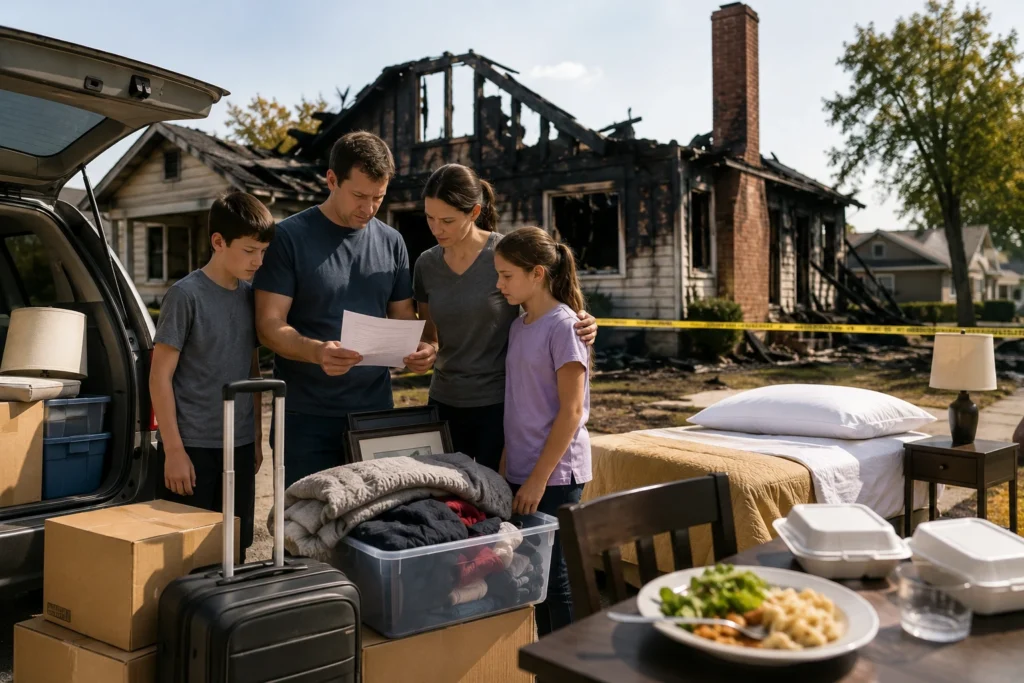
Although ALE coverage can be extensive, it is not unlimited. Understanding exclusions is equally important.
Mortgage Payments
Mortgage obligations generally continue regardless of the fire.
Routine Bills
Expenses you would normally pay anyway often remain your responsibility.
Examples include:
- Car payments
- Credit card bills
- Health insurance
- Streaming subscriptions
Luxury Upgrades
ALE is intended to maintain a reasonable standard of living. Insurance generally does not pay for luxury accommodations that exceed your previous lifestyle.
How Insurance Companies Calculate Additional Living Expenses
Calculating ALE benefits is not always straightforward. Insurance adjusters compare pre-loss expenses against post-loss expenses. The difference often determines reimbursement. Consider this example.
Before the fire:
| Expense | Monthly Cost |
| Food | $900 |
| Fuel | $250 |
| Housing Rental | $0 |
After the fire:
| Expense | Monthly Cost |
| Food | $1,500 |
| Fuel | $450 |
| Rental Home | $2,500 |
Potential ALE reimbursement:
| Category | Additional Cost |
| Food | $600 |
| Fuel | $200 |
| Housing | $2,500 |
| Total | $3,300 |
Over eight months, that could exceed $26,000. This example demonstrates why Additional Living Expenses After a Fire can become one of the most valuable parts of a claim.
How Long Does ALE Coverage Last?
The duration of coverage depends on policy language. Many homeowners assume benefits continue until they move back into the property. That assumption can be dangerous. Policies often include specific limitations.
Coverage may end when:
- Repairs are completed
- Rebuilding is completed
- Policy limits are exhausted
- Time restrictions are reached
Some policies provide coverage for 12 months. Others may provide coverage for 24 months or longer. Every policy is different. Reviewing these provisions early helps avoid unpleasant surprises.
Understanding ALE Coverage Limits
Insurance companies typically establish limits on ALE benefits. These limits are often structured in one of two ways.
Percentage-Based Limits
Many policies provide ALE coverage as a percentage of dwelling coverage.
Example:
| Dwelling Coverage | ALE Limit (20%) |
| $300,000 | $60,000 |
| $500,000 | $100,000 |
| $750,000 | $150,000 |
Fixed Dollar Limits
Some policies establish specific dollar caps regardless of dwelling coverage. Once the limit is reached, reimbursement generally stops. Monitoring expenditures throughout the claim becomes extremely important.
Documentation: The Foundation of Every ALE Claim
If there is one action every homeowner should take after a fire, it is this: Document everything. Seriously. Everything. Insurance companies rely heavily on evidence when evaluating Additional Living Expenses After a Fire. Without documentation, reimbursement becomes significantly more difficult.
Save Housing Records
Keep copies of:
- Hotel invoices
- Lease agreements
- Rental contracts
- Security deposit receipts
Save Food Receipts
Maintain records for:
- Restaurants
- Grocery purchases
- Delivery services
- Catering expenses
Save Transportation Records
Track:
- Mileage
- Fuel purchases
- Parking costs
- Tolls
Save Utility Documentation
Retain:
- Internet invoices
- Utility deposits
- Service activation fees
Save Storage Documentation
Keep records of:
- Storage contracts
- Monthly invoices
- Moving expenses
The more organized your documentation, the stronger your claim becomes.
Why Maintaining a Claim Journal Is So Valuable
Receipts are important. A claim journal is equally important. Many homeowners underestimate its value.
After a fire, communication often occurs with:
- Insurance adjusters
- Contractors
- Engineers
- Restoration companies
- Temporary housing providers
Keeping detailed notes creates a reliable record.
Record:
- Date
- Time
- Name
- Company
- Discussion summary
Months later, those notes may become extremely valuable.
Common ALE Claim Mistakes
Mistakes happen. Unfortunately, some mistakes can cost thousands of dollars.
Throwing Away Receipts
This is perhaps the most common error. No documentation often means no reimbursement.
Waiting Too Long
Delays create complications. Submit expenses regularly.
Assuming Coverage Exists
Never assume. Verify. Policy language controls coverage decisions.
Failing to Monitor Limits
Many homeowners discover coverage limitations only after significant expenses have accumulated.
Ignoring Small Expenses
Even minor costs add up over time. Track everything.
Challenges Homeowners Often Face
Policy language can be complicated. One provision may appear straightforward. Another may create uncertainty.
In some situations, claim disputes involve technical concepts similar to those found in fields such as Topological Vector Space, where interpretation of complex frameworks becomes critically important. Insurance policies may not be mathematical theories, but understanding their structure can still require careful analysis.
Delayed Reimbursement
Expenses continue regardless of when insurance payments arrive. This can create cash flow problems.
Disputed Housing Costs
Insurance companies may question whether temporary housing expenses are reasonable.
Documentation Requests
Additional requests for receipts and records are common.
Extended Rebuilding Timelines
Labor shortages, permit delays, and material availability can significantly extend repair schedules.
The Role of a Public Adjuster
Most homeowners file only a handful of insurance claims during their lifetime. Insurance companies handle claims every day. That creates an experience gap. A public adjuster represents the policyholder rather than the insurance company.
Their role may include:
- Policy review
- Documentation assistance
- Claim valuation
- Negotiation support
- ALE analysis
Many people researching fire claims eventually encounter discussions about The Truth About Public Adjusters. The reality is straightforward. Public adjusters work on behalf of the insured and help ensure all covered damages and expenses are properly evaluated.
Real-World Example of ALE Benefits

Imagine a family experiences a severe kitchen fire. Smoke spreads throughout the house. The property requires extensive repairs. The family relocates to a rental home. Repairs take ten months.
Over that period, they incur:
- $25,000 in rental expenses
- $6,000 in additional food costs
- $2,500 in transportation costs
- $3,500 in storage fees
- $1,000 in utility setup costs
Total additional expenses exceed $38,000. Without ALE coverage, those costs would come directly from the family’s pocket. This example illustrates why Additional Living Expenses After a Fire deserve careful attention.
Special Considerations for Homeowners in Corsicana
Every community presents unique challenges. For families in Corsicana, temporary housing options may vary depending on market conditions and seasonal demand. Remaining close to schools, workplaces, healthcare providers, and family support networks is often important during recovery.
Distance matters. Longer commutes increase costs. Additional fuel expenses accumulate. Temporary housing availability can also influence reimbursement discussions. Homeowners in Corsicana should review ALE provisions before disaster strikes rather than after. Preparation is always easier than reaction.
Other Coverages That Work Alongside ALE
ALE coverage is only one component of a fire claim. Several additional coverages often work together.
Dwelling Coverage
Pays for repairs or rebuilding.
Personal Property Coverage
Addresses damaged belongings.
Debris Removal Coverage
Helps pay for cleanup.
Smoke Damage Coverage
Addresses contamination throughout the structure.
Building Code Upgrade Coverage
May help pay for required improvements during reconstruction. A comprehensive claim review considers every available benefit.
Action Steps to Take Immediately After a Fire
The hours following a fire can feel overwhelming. Focus on these priorities.
Contact Your Insurance Company
Report the loss immediately.
Secure Temporary Housing
Safety comes first.
Photograph Damage
Document everything before cleanup begins.
Start Tracking Expenses
Begin on day one.
Save Every Receipt
Create digital backups whenever possible.
Review Policy Coverage
Understand ALE limits and requirements.
Seek Professional Assistance
Complex claims may benefit from expert guidance.
Why Preparation Before a Fire Matters
Many homeowners do not review their policy until after disaster strikes. That is understandable. Unfortunately, it can also be costly.
Before a loss occurs:
- Review coverage limits annually.
- Understand ALE provisions.
- Confirm dwelling coverage adequacy.
- Maintain digital records of belongings.
- Store policy documents securely.
A little preparation today can save tremendous frustration tomorrow.
Final Thoughts
A fire impacts far more than a building. It disrupts routines, finances, schedules, and peace of mind. That is why understanding Additional Living Expenses After a Fire is so important. Temporary housing, food, transportation, storage, and other increased costs can create significant financial pressure while repairs are underway. Fortunately, ALE coverage exists to help reduce that burden.
The key is understanding your rights, maintaining excellent documentation, monitoring coverage limits, and actively managing the claim process. For homeowners in Corsicana, taking the time to understand Additional Living Expenses After a Fire before a disaster occurs can help ensure a smoother recovery if the unexpected happens. With proper planning, thorough documentation, and a clear understanding of your insurance policy, you can focus less on financial uncertainty and more on rebuilding, recovering, and moving forward.
FAQs
Additional Living Expenses (ALE) are the extra costs you incur when a covered fire makes your home uninhabitable and you must temporarily live elsewhere.
Coverage depends on your policy and whether the fire is a covered loss. Reviewing your policy language is essential to understand your specific benefits.
ALE benefits typically continue until repairs are completed, the home is rebuilt, or the policy limit or time limit is reached.
In many cases, yes. Temporary lodging is one of the most common expenses covered under ALE when your home cannot be occupied.
Insurance may reimburse the additional cost of meals compared to your normal food expenses while you are displaced from your home.
Yes. Keeping detailed receipts and records is one of the most important steps in supporting an ALE claim.
It may. If temporary housing cannot accommodate pets, some policies may cover reasonable pet boarding costs.
Once the policy limit is reached, additional living expenses generally become the homeowner’s responsibility unless other coverage applies.
Yes. A public adjuster can review your policy, organize documentation, identify eligible expenses, and negotiate with the insurance company.
Secure safe housing, notify your insurance company, begin tracking expenses immediately, and save every receipt related to your displacement.