
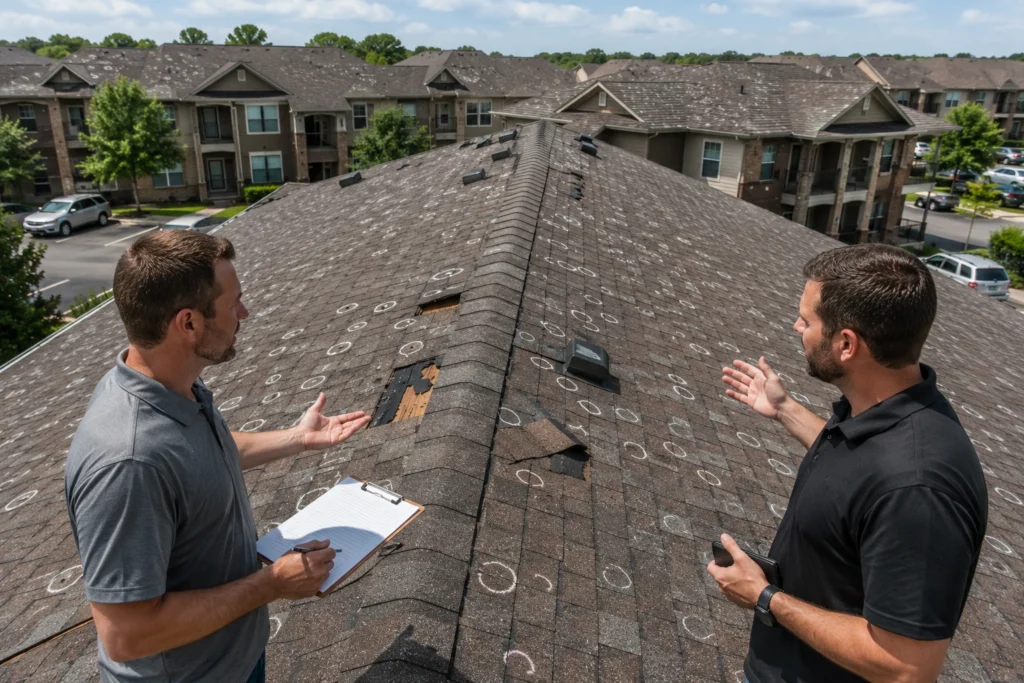
Apartment Complex Hail Damage Claims can quickly become some of the most expensive and frustrating insurance claims a property owner will ever face. One severe Texas hailstorm can damage multiple buildings, hundreds of roofing squares, HVAC systems, siding, windows, gutters, and common areas simultaneously. Suddenly, what seemed like a routine weather event turns into a claim worth hundreds of thousands—or even millions of dollars.
For apartment owners, property managers, and investors, the stakes are enormous. Unlike a single-family home, an apartment complex contains numerous structures, tenants, amenities, and revenue streams. When hail damage occurs, repairs become more complicated, documentation becomes more important, and insurance disputes become far more likely.
In communities like Corsicana, where severe weather is a recurring concern, understanding how apartment complex hail damage claims work can significantly impact the outcome of a claim. The difference between a well-documented claim and a poorly documented one may represent a substantial financial loss. Let’s explore what every apartment owner should know before, during, and after a hail damage claim.
Understanding Hail Damage at Apartment Complexes
Apartment communities present a unique challenge after a hailstorm. The sheer size of these properties creates more opportunities for damage. A storm that causes moderate damage to a single home can create widespread destruction across a multifamily property. Hail affects far more than roofing materials.
Common areas frequently impacted include:
- Roof systems
- Gutters and downspouts
- Siding
- Exterior paint
- HVAC equipment
- Carports
- Covered walkways
- Fencing
- Pool equipment
- Clubhouses
- Leasing offices
- Window screens
Each damaged component may be covered differently under an insurance policy. That complexity often creates disputes.
Why Apartment Properties Are Different
A homeowner may have one roof. An apartment owner may have twenty. A homeowner may need one inspection. An apartment complex may require inspections across multiple structures, elevations, and roofing systems. The scale changes everything. The larger the property, the greater the likelihood that some damage will be overlooked during the initial insurance inspection. This is one reason apartment complex hail damage claims frequently become negotiation-heavy claims.
How Hail Actually Damages Apartment Buildings
Many property owners expect hail damage to be obvious. Sometimes it is. Often it isn’t. Hail can create visible dents and fractures. However, some of the most expensive damage remains hidden until months later.
Roofing Damage
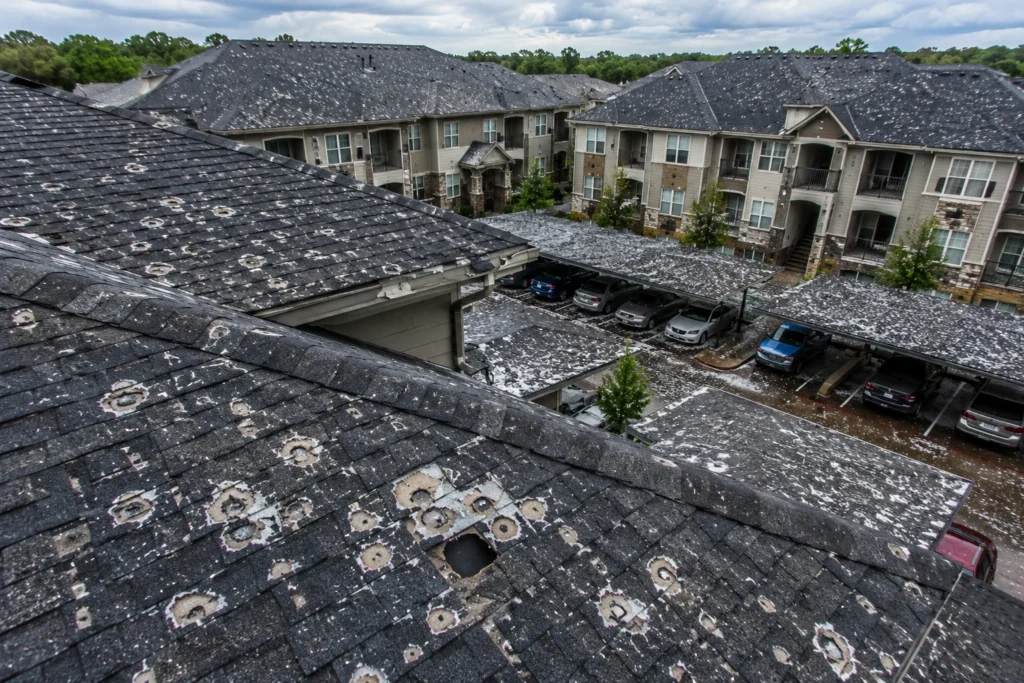
Roofs absorb the majority of hail impacts.
Common signs include:
- Granule loss
- Bruising
- Fractured shingles
- Cracked tiles
- Membrane punctures
- Exposed substrate
These issues can shorten roof lifespan dramatically. Even when leaks are not immediately present, the roof’s ability to shed water may be compromised.
Metal Components
Metal surfaces often provide the clearest evidence of a hailstorm.
Inspectors commonly look for:
- Dented gutters
- Damaged downspouts
- Dented roof vents
- Damaged flashing
- Carport impact marks
These components frequently help establish storm intensity.
HVAC Equipment
Apartment communities often contain dozens of rooftop units and condensers.
Hail impacts may damage:
- Fins
- Coils
- Protective covers
- Mechanical components
The equipment may continue operating initially. Performance problems often emerge later.
Exterior Siding and Cladding
Hail can fracture, crack, or dent exterior materials.
Damage may affect:
- Vinyl siding
- Fiber cement panels
- Metal panels
- Decorative trim
These repairs often become controversial because insurance carriers may classify some impacts as cosmetic.
Signs Property Owners Should Never Ignore
The earlier damage is identified, the stronger the claim typically becomes. Property owners should investigate after every significant hail event. Watch for these warning signs.
Inside the Buildings
Look for:
- Ceiling stains
- Water spots
- Damp insulation
- Mold odors
- Peeling paint
These indicators may suggest roof-related water intrusion.
Around the Property
Pay attention to:
- Dented mailboxes
- Broken screens
- Damaged light fixtures
- Cracked skylights
- Damaged signage
Widespread collateral damage often supports the existence of a significant hail event.
On Roofing Systems
Roof inspections should identify:
- Circular impact marks
- Missing granules
- Cracks
- Splits
- Soft spots
Waiting months to inspect increases the likelihood that evidence disappears.
Why Hidden Damage Creates Major Problems
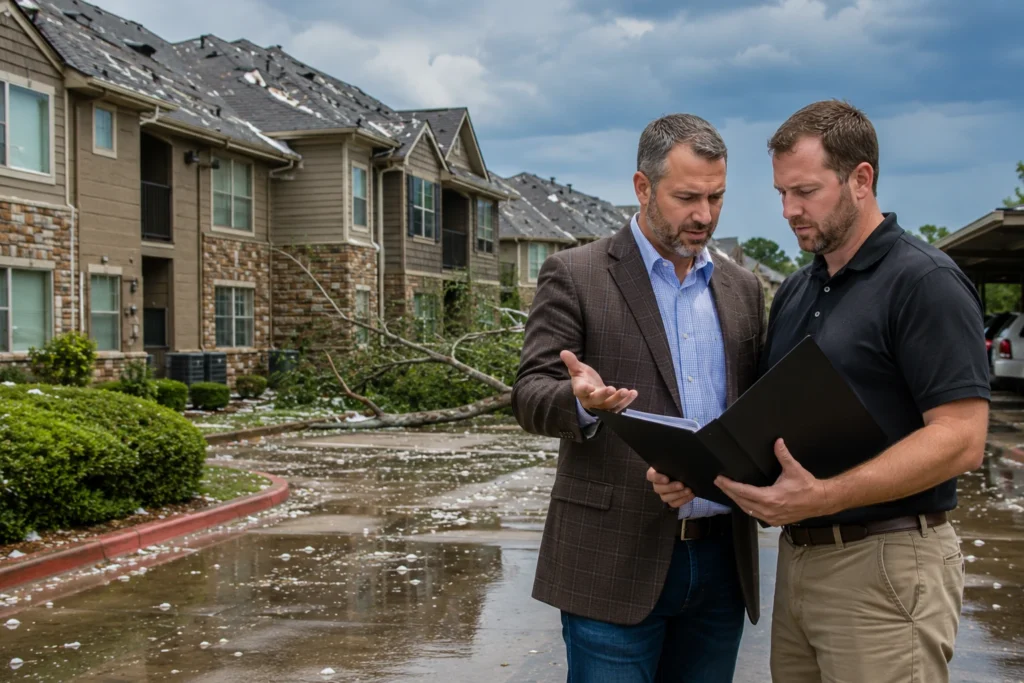
One of the biggest mistakes apartment owners make is assuming that no leaks means no damage. That assumption can become expensive. Roof systems are designed to resist water intrusion. A damaged roof may continue functioning for months before a leak appears. By the time moisture reaches interior areas, repair costs can increase substantially.
Hidden damage often includes:
| Hidden Issue | Potential Consequence |
| Compromised underlayment | Future leaks |
| Damaged insulation | Energy loss |
| Moisture intrusion | Mold growth |
| Structural deterioration | Increased repair costs |
| Decking damage | Expanded replacement scope |
This is why professional inspections matter. Surface observations alone rarely tell the entire story.
The Apartment Complex Hail Damage Claims Process
Understanding the claim process helps property owners avoid costly mistakes. While every claim differs, most follow a similar progression.
Step One: Conduct an Immediate Inspection
Time matters. After a hailstorm, inspect the property as soon as it is safe.
Focus on:
- Roofing systems
- Mechanical equipment
- Building exteriors
- Tenant-reported damage
- Common areas
Document everything. Photos taken immediately after a storm often become valuable evidence later.
Step Two: Mitigate Additional Damage
Insurance policies generally require owners to prevent further loss.
This may involve:
- Temporary tarping
- Water extraction
- Emergency repairs
- Securing damaged areas
Failure to mitigate can create coverage disputes. Keep all invoices and receipts.
Step Three: Document Thoroughly
Documentation wins claims.
Create a comprehensive record that includes:
- Photographs
- Drone imagery
- Maintenance records
- Repair estimates
- Weather reports
- Contractor observations
- Tenant complaints
The stronger the documentation package, the stronger the claim position.
Step Four: Notify the Insurance Carrier
Most policies require prompt reporting. Delays can create unnecessary complications.
When filing the claim:
- Provide accurate information
- Avoid speculation
- Share available documentation
- Request confirmation of claim receipt
Keep copies of all communications. Every email matters. Every phone conversation should be documented.
What Happens During the Insurance Inspection
The carrier typically assigns an adjuster to evaluate damages. This inspection becomes one of the most important moments in the entire claim. Unfortunately, it isn’t always perfect.
Areas Typically Reviewed
Insurance representatives often examine:
- Roof surfaces
- Gutters
- Siding
- Mechanical equipment
- Windows
- Exterior structures
Depending on claim size, additional experts may become involved.
These can include:
- Engineers
- Roofing consultants
- Building envelope specialists
Common Problems During Inspections
Several issues frequently arise.
Incomplete Property Review
Large apartment complexes require time. Some inspections may not cover every building thoroughly.
Missed Damage
Not all hail impacts are easy to identify. Subtle roofing damage is frequently overlooked.
Limited Testing
Some roofing systems require detailed evaluation. Visual inspections alone may not reveal the full extent of damage.
Scope Disagreements
Property owners and insurers often disagree regarding:
- Repair versus replacement
- Number of affected buildings
- Extent of damage
- Required code upgrades
These disagreements are common in apartment complex hail damage claims.
Reviewing the Insurance Estimate
Receiving an estimate is not the end of the process. In many cases, it is only the beginning. Property owners should carefully review every line item.
Pay close attention to:
- Quantities
- Measurements
- Material pricing
- Labor costs
- Building counts
- Depreciation calculations
Mistakes happen. Sometimes entire structures are omitted. Sometimes repair quantities are underestimated. Sometimes critical components are missed altogether. A detailed comparison between the insurance estimate and contractor findings often reveals significant differences.
Understanding Depreciation
Insurance carriers frequently apply depreciation to damaged property.
Factors may include:
- Age
- Condition
- Remaining useful life
These calculations can dramatically affect initial payments. Property owners should understand whether their policy provides:
| Coverage Type | Description |
| Actual Cash Value | Replacement cost minus depreciation |
| Replacement Cost Value | Cost to replace with new materials |
| Agreed Value | Predetermined value established by policy |
The distinction matters. It can impact settlement values by hundreds of thousands of dollars on large apartment claims.
Why Large Apartment Claims Become Complex
Apartment complex hail damage claims rarely involve a single issue. Instead, they involve dozens. Sometimes hundreds. Multiple buildings. Multiple tenants. Multiple repair scopes. Multiple experts. This complexity often resembles solving a puzzle where every piece affects another.
Interestingly, the process shares some similarities with concepts studied in fields like Topology, where interconnected relationships influence the overall structure. While insurance claims are obviously different, the idea that every component affects the larger system remains surprisingly relevant. And when large sums of money are involved, every detail matters. Property owners who understand the process are typically better positioned to protect their investment and maximize recovery after a major hailstorm.
Common Challenges in Apartment Complex Hail Damage Claims
Many property owners assume that once a claim is filed, the insurance company will simply calculate the damage and issue payment. Reality is often very different. Apartment complex hail damage claims frequently involve disagreements regarding the scope of damage, repair methods, pricing, and policy interpretation. The larger the property, the more opportunities there are for disputes.
Underpaid Roof Damage Claims
Roof systems usually represent the largest portion of a hail claim. That also makes them the most heavily scrutinized. Insurance carriers may determine that only certain roof sections require repair while contractors believe full replacement is necessary. This difference can create substantial gaps in estimated costs.
For example:
| Issue | Insurance Position | Contractor Position |
| Limited hail impacts | Spot repair | Full replacement |
| Granule loss | Cosmetic | Functional damage |
| Roof aging | Wear and tear | Storm accelerated failure |
| Matching concerns | Not covered | Replacement required |
These disagreements often become the central focus of apartment complex hail damage claims.
Cosmetic Damage Exclusions
Many commercial insurance policies contain provisions addressing cosmetic damage. This can create confusion. An insurer may acknowledge hail impacts while arguing that the damage affects appearance rather than functionality. Property owners often see things differently.
Dented metal surfaces, damaged architectural features, and visible impact marks can negatively affect:
- Property appearance
- Tenant satisfaction
- Leasing efforts
- Property value
- Investor perception
A building does not have to leak to suffer financial harm. Visual condition matters. Especially in competitive rental markets.
Pre-Existing Damage Allegations
One of the most common insurer arguments involves pre-existing conditions.
Examples include:
- Roof aging
- Deferred maintenance
- Prior storm damage
- Material deterioration
- Installation defects
This is why maintenance records are so valuable. A documented history showing proper upkeep can help counter these arguments.
Delayed Reporting Issues
Time is not always on the property owner’s side. The longer damage remains unreported, the more opportunities exist for disputes.
Insurance companies may argue:
- Damage occurred during another storm
- Evidence deteriorated
- Repairs became more expensive due to delays
- Additional damage resulted from neglect
Prompt reporting helps preserve evidence and strengthen credibility.
Apartment Complex Roof Damage: The Heart of Most Claims
When discussing apartment complex hail damage claims, roofing systems deserve special attention. They often account for the largest percentage of repair costs.
Common Apartment Roofing Systems
Apartment communities may contain several roofing types, including:
- Asphalt shingles
- TPO membranes
- Modified bitumen
- Standing seam metal roofing
- Tile roofing
Each system responds differently to hail. Some damage is obvious. Some requires specialized evaluation.
Functional Damage Versus Cosmetic Damage
This distinction appears repeatedly during claims. Functional damage affects the roof’s ability to perform its intended purpose.
Examples include:
- Fractures
- Punctures
- Tears
- Exposed reinforcement layers
- Loss of waterproofing capability
Cosmetic damage may involve dents or visual blemishes. However, the line between cosmetic and functional damage is not always clear. Many disputes arise because property owners and insurers interpret impacts differently.
The Cost of Delayed Roof Repairs
Waiting can be expensive. Very expensive. A small area of damage today may become a widespread leak tomorrow.
Delayed repairs can lead to:
- Interior damage
- Mold growth
- Tenant complaints
- Increased restoration costs
- Business interruption
The sooner problems are identified, the easier they are to manage.
Tenant-Related Challenges After Hail Damage
Apartment communities introduce a factor that residential claims do not have. Tenants. Dozens or even hundreds of them.
Interior Water Damage Complaints
Following a storm, tenants may report:
- Ceiling leaks
- Wall staining
- Wet flooring
- Musty odors
These reports should never be ignored. Tenant observations often help identify damage that may otherwise remain hidden.
Habitability Concerns
Significant damage can affect occupancy.
Issues may include:
- Water intrusion
- Unsafe conditions
- Electrical concerns
- Structural damage
Property owners may face pressure to relocate tenants temporarily. That creates additional expenses.
Protecting Rental Income
Rental income is often the engine that drives apartment investments. Storm damage can threaten that income.
Property owners should carefully document:
- Vacant units caused by damage
- Tenant relocation costs
- Reduced occupancy
- Business interruption impacts
Depending on policy provisions, some of these losses may be recoverable.
How Insurance Companies Evaluate Apartment Complex Hail Damage Claims
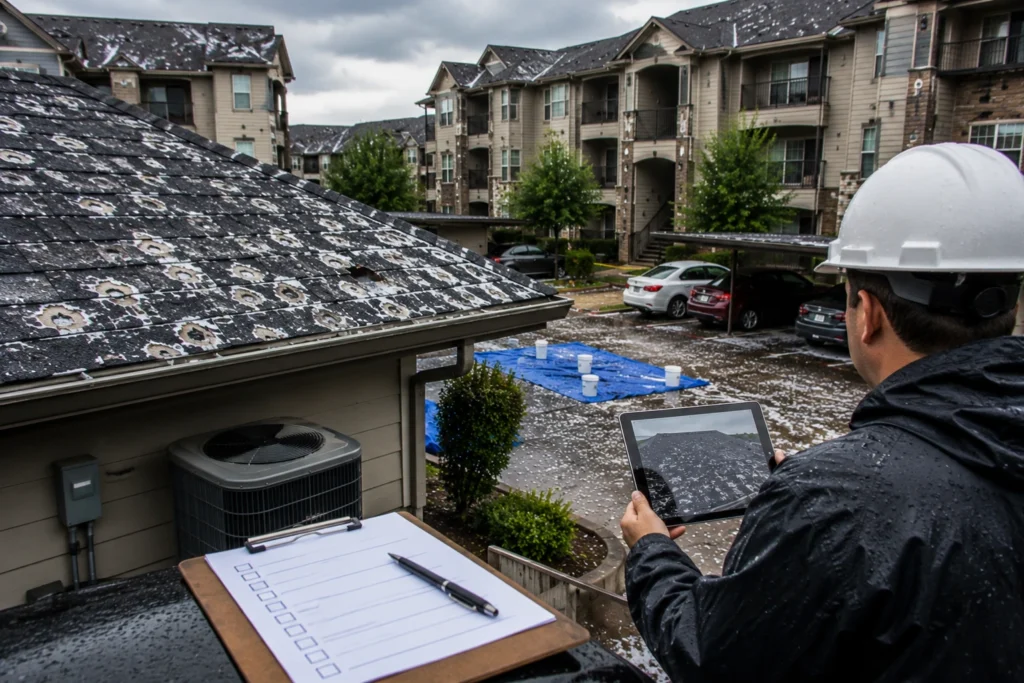
Insurance carriers use a structured process to evaluate losses. Understanding that process helps property owners prepare more effectively.
Initial Assessment
The insurer generally reviews:
- Cause of loss
- Date of loss
- Coverage applicability
- Physical damage evidence
The goal is determining whether the policy covers the reported damages.
Engineering Evaluations
Large losses sometimes involve engineers.
Their responsibilities may include:
- Assessing structural concerns
- Determining causation
- Evaluating roof conditions
- Analyzing material performance
Engineering opinions can significantly influence claim outcomes.
Drone Technology
Modern inspections increasingly utilize drones.
Benefits include:
- Faster roof access
- Better imagery
- Reduced safety risks
- Comprehensive documentation
Drone photographs often become important claim evidence.
Pricing Reviews
The insurance company also evaluates repair pricing.
Areas reviewed include:
| Category | Considerations |
| Materials | Current market rates |
| Labor | Local labor costs |
| Equipment | Rental and specialty equipment |
| Overhead | Project management expenses |
| Profit | Contractor profitability allowances |
Disputes frequently arise when parties disagree about reasonable pricing.
Common Reasons Apartment Complex Hail Damage Claims Are Denied
Not every claim receives full approval. Some receive partial payment. Others are denied entirely.
Insufficient Documentation
Documentation remains one of the biggest factors affecting claim success.
Weak documentation often results in:
- Reduced payments
- Delays
- Coverage disputes
Maintenance-Related Arguments
Insurance covers sudden losses. It generally does not cover poor maintenance.
Insurers may attempt to attribute damage to:
- Aging roofs
- Neglect
- Wear and tear
- Existing defects
Proper maintenance records can help rebut these allegations.
Policy Exclusions
Every policy contains exclusions.
Examples may include:
- Certain cosmetic damage
- Flooding
- Earth movement
- Neglect
Understanding policy language is essential.
Missed Deadlines
Policies often contain notice requirements and deadlines. Failure to comply can jeopardize coverage.
Maximizing Apartment Complex Hail Damage Claim Settlements
The goal is not simply filing a claim. The goal is maximizing recovery under the policy.
Maintain Detailed Records
Good recordkeeping creates leverage.
Keep:
- Inspection reports
- Maintenance logs
- Contractor proposals
- Photos
- Repair invoices
Documentation supports every aspect of a claim.
Conduct Independent Inspections
Never rely solely on one opinion. Independent inspections often identify damage that others miss.
Preserve Evidence
Do not discard damaged materials prematurely. Preserved evidence may prove valuable later.
Track Every Expense
Storm-related costs add up quickly.
Examples include:
- Emergency repairs
- Water mitigation
- Security measures
- Temporary housing assistance
- Cleanup costs
Every dollar should be documented.
Understand Policy Language
Policy language drives claim outcomes. Understanding coverage provisions helps property owners avoid surprises. Some property owners become interested in topics often discussed online under phrases like Fire Insurance Adjuster Secrets, but the most effective strategy is far less mysterious: thorough documentation, prompt action, and a clear understanding of policy coverage.
Why Apartment Owners in Corsicana Often Seek Professional Claim Assistance
Large multifamily claims involve substantial financial exposure. That reality drives many property owners to seek professional support.
Multiple Structures Mean Multiple Variables
Apartment complexes rarely consist of one building.
They may contain:
- Residential buildings
- Clubhouses
- Leasing offices
- Garages
- Carports
- Amenity structures
Each component must be evaluated separately.
Complex Insurance Policies
Commercial property policies are detailed documents. Coverage interpretations often affect settlement amounts. Professional claim review can help identify issues that may otherwise go unnoticed.
Negotiation Challenges
Insurance companies handle claims every day. Many property owners handle major claims only occasionally. That experience gap can influence outcomes.
Unique Considerations in Corsicana
Property owners in Corsicana face recurring exposure to severe weather events. Hail, high winds, and intense storms can affect multifamily properties significantly.
s a result, apartment owners in Corsicana often prioritize proactive inspections and comprehensive documentation long before a storm ever occurs.
Apartment Complex Hail Damage Claim Best Practices
The strongest claims usually begin before the storm arrives. Preparation matters.
Before the Storm
Photograph the Property
Maintain current photographs of:
- Roofs
- Exteriors
- Amenities
- Mechanical equipment
Baseline documentation is invaluable.
Review Coverage Annually
Policies change. Property values change. Construction costs change. Annual reviews help ensure adequate protection.
Maintain Inspection Records
Regular inspections demonstrate responsible ownership. They also help rebut maintenance-related allegations.
After the Storm
Inspect Immediately
Early inspections preserve evidence.
Document Everything
Photographs and videos should be extensive.
Mitigate Additional Damage
Protect the property from further loss.
Report Claims Promptly
Early reporting often strengthens the claim process.
Why Early Action Matters
The hours and days following a hailstorm can influence the entire claim.
Evidence Disappears
Weather continues. Materials deteriorate. Impacts become harder to identify.
Repair Costs Increase
Small problems can become major projects.
Tenant Frustration Grows
Unresolved damage affects resident satisfaction.
Settlement Opportunities Improve
Strong evidence often leads to stronger negotiations.
Apartment Complex Hail Damage Claims in Corsicana: Key Takeaways
Apartment complex hail damage claims involve far more than repairing a few shingles. These claims often affect multiple buildings, numerous tenants, extensive roofing systems, and significant financial interests. Property owners who act quickly tend to place themselves in a stronger position. Documentation matters.
Inspections matter. Policy knowledge matters. Most importantly, preparation matters. For apartment owners in Corsicana, severe weather is not a question of if. It is often a question of when. Understanding the claims process before the next hailstorm arrives can help protect property value, reduce financial losses, and improve the likelihood of a fair insurance settlement.
Conclusion
Apartment complex hail damage claims are among the most challenging commercial property claims an owner can face. The scale of damage, number of affected structures, tenant concerns, and potential insurance disputes create a process that demands careful attention from start to finish.
Successful claims are rarely built on assumptions. They are built on inspections, evidence, documentation, and timely action. Property owners who understand how insurers evaluate damage and who maintain detailed records are often better positioned to recover the full value of covered losses.
Whether the damage involves roofing systems, HVAC equipment, siding, common areas, or interior water intrusion, every detail matters. By responding quickly after a storm, preserving evidence, and understanding policy obligations, apartment owners can better protect both their properties and their long-term investment.
FAQs
Hail damage may include roof impacts, dented metal components, damaged HVAC units, cracked siding, broken windows, and water intrusion caused by storm-related damage.
Property owners should report damage as soon as possible after a storm to preserve evidence and avoid potential reporting-related disputes.
Yes. Claims may be denied due to policy exclusions, insufficient documentation, maintenance-related issues, or disputes regarding the cause of damage.
Not necessarily. Some roofs can be repaired, while others may require replacement depending on the extent of the damage and the roofing system involved.
Owners should document all visible damage with photographs, videos, inspection reports, tenant complaints, weather records, and repair estimates.
Many policies cover hail-damaged HVAC equipment if the damage resulted directly from the covered storm event and is not excluded by the policy.
Disputes often involve the extent of damage, repair versus replacement decisions, depreciation calculations, and whether damage is storm-related or pre-existing.
Some insurance policies include business income or loss-of-rents coverage that may help compensate for storm-related occupancy losses.
Prompt inspections, detailed documentation, maintenance records, and professional evaluations can significantly improve claim support.
A public adjuster may be beneficial when claims involve significant damage, multiple buildings, disputed coverage issues, or complex settlement negotiations.