

Receiving an insurance settlement offer can feel like the finish line after a stressful property loss. Yet many homeowners and business owners later discover that the first estimate they received was not the full story. That is exactly why a Second Opinion for Insurance Claims can be one of the smartest decisions a policyholder makes.
Most people assume the insurance company’s estimate is final. It often is not. In reality, claim evaluations are based on inspections, measurements, pricing databases, policy interpretations, and human judgment. When any of those factors are incomplete or inaccurate, the result can be an underpaid claim.
For property owners in Corsicana, where severe weather, hailstorms, wind events, water damage, and fire losses can create substantial repair costs, obtaining a second opinion can provide valuable clarity before accepting a settlement. This guide explains how insurance claim second opinions work, when they make sense, and why they frequently uncover opportunities that policyholders never knew existed.
What Is a Second Opinion for Insurance Claims?
A second opinion for an insurance claim is an independent review of your loss, damage documentation, repair estimates, and insurance carrier findings. Think about it this way. If a doctor recommends a major medical procedure, many patients seek another professional opinion before moving forward. Property insurance claims deserve the same level of scrutiny.
A second opinion typically involves:
- Reviewing the insurance policy
- Examining carrier estimates
- Inspecting property damage
- Identifying missed items
- Evaluating repair costs
- Comparing findings against settlement offers
The goal is not to create conflict. The goal is accuracy. Sometimes the insurance company’s estimate is reasonable. Sometimes significant issues are discovered. The only way to know is through a thorough review.
Why Insurance Estimates Are Not Always Accurate
Insurance adjusters handle a tremendous volume of claims. Many do excellent work. However, no inspection process is perfect. Following major weather events, adjusters may inspect dozens of properties within a short period. Time limitations alone can increase the likelihood of overlooked damage.
Common factors that contribute to claim inaccuracies include:
| Potential Issue | Impact on Settlement |
| Missed damage | Lower repair estimate |
| Incomplete measurements | Reduced scope of work |
| Outdated pricing | Underestimated costs |
| Hidden damage not discovered | Future expenses for owner |
| Policy interpretation disputes | Reduced coverage |
A small omission can create a surprisingly large difference. Imagine a roof inspection where only visible damage is documented. If underlying decking damage is discovered later, repair costs can increase substantially. That gap often becomes the responsibility of the property owner unless it is properly documented and presented.
The Hidden Cost of Accepting the First Offer
Many property owners focus only on the settlement amount. The bigger question is whether the amount actually restores the property. That distinction matters. A settlement may appear substantial at first glance. Yet once contractor estimates arrive, many owners realize the approved amount falls short.
The consequences can include:
- Delayed repairs
- Additional out-of-pocket costs
- Reduced property value
- Contractor disputes
- Extended claim negotiations
I’ve seen situations where property owners accepted settlements quickly simply because they wanted the process to end. Months later, they discovered the approved amount was insufficient to complete repairs. At that point, recovering additional funds becomes much more difficult.
Signs You Need a Second Opinion
Not every claim requires additional review. However, several warning signs suggest a second opinion may be beneficial.
Your Contractor’s Estimate Is Much Higher
This is one of the most common indicators. When multiple contractors consistently estimate repairs at significantly higher amounts than the insurance carrier, it raises important questions. Differences deserve investigation.
Damage Appears Missing
Property owners often notice omitted items after reviewing estimates.
Examples include:
- Interior water damage
- Fence damage
- Gutters
- Window damage
- Detached structures
- HVAC systems
If something appears missing, it may be worth obtaining a second review.
The Claim Was Partially Denied
Partial denials frequently involve disagreements regarding:
- Cause of damage
- Extent of damage
- Wear and tear allegations
- Maintenance issues
A second opinion may uncover evidence supporting a different conclusion.
You Feel Pressured to Settle
Rushing major financial decisions rarely produces the best outcome. Insurance settlements are no exception.
Insurance Claims That Benefit Most From a Second Opinion
Certain claim types tend to generate more disputes than others.
Roof Damage Claims
Roof losses often involve disagreements regarding:
- Wind damage
- Hail impacts
- Shingle replacement
- Matching requirements
- Roof age
Roof claims can be particularly complex because some damage may not be visible from the ground.
Water Damage Claims
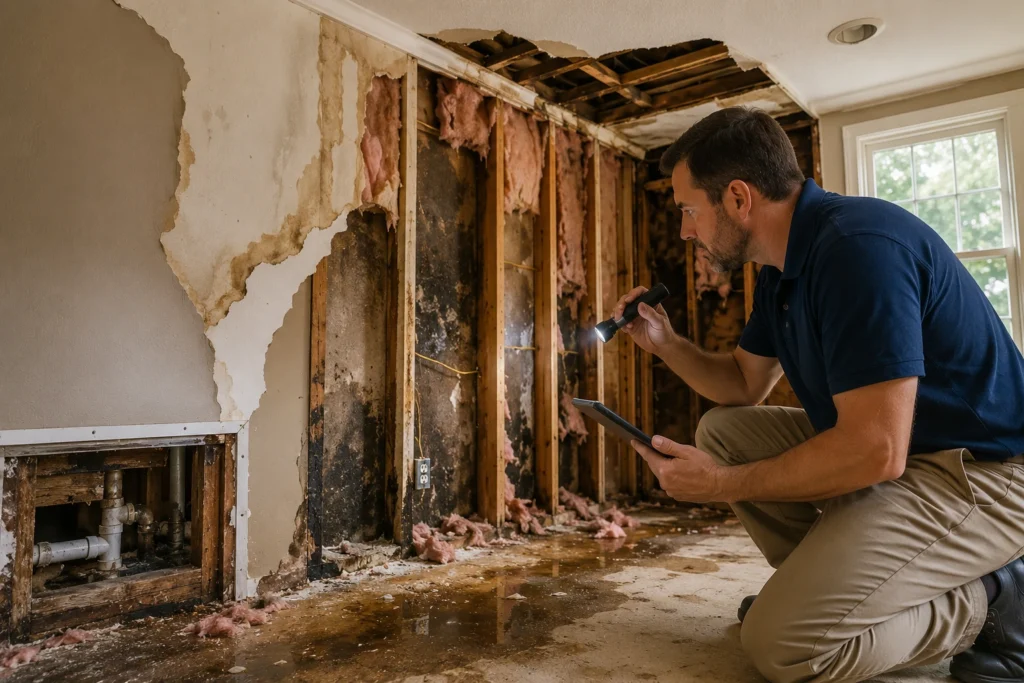
Water rarely stays where it starts. It moves. It spreads. It often reaches hidden areas that are not immediately visible during initial inspections.
Common concerns include:
- Wet insulation
- Subfloor damage
- Structural moisture
- Mold growth
- Drywall deterioration
These conditions can dramatically increase restoration costs.
Fire and Smoke Damage Claims
Fire claims involve much more than burned materials.
Smoke contamination alone can affect:
- Electronics
- Furniture
- HVAC systems
- Clothing
- Structural surfaces
Comprehensive evaluations are critical.
Commercial Property Claims
Commercial losses introduce additional challenges.
Owners may face:
- Lost revenue
- Tenant issues
- Equipment damage
- Operational interruptions
Even minor valuation errors can have significant financial consequences.
Understanding the Second Opinion Process
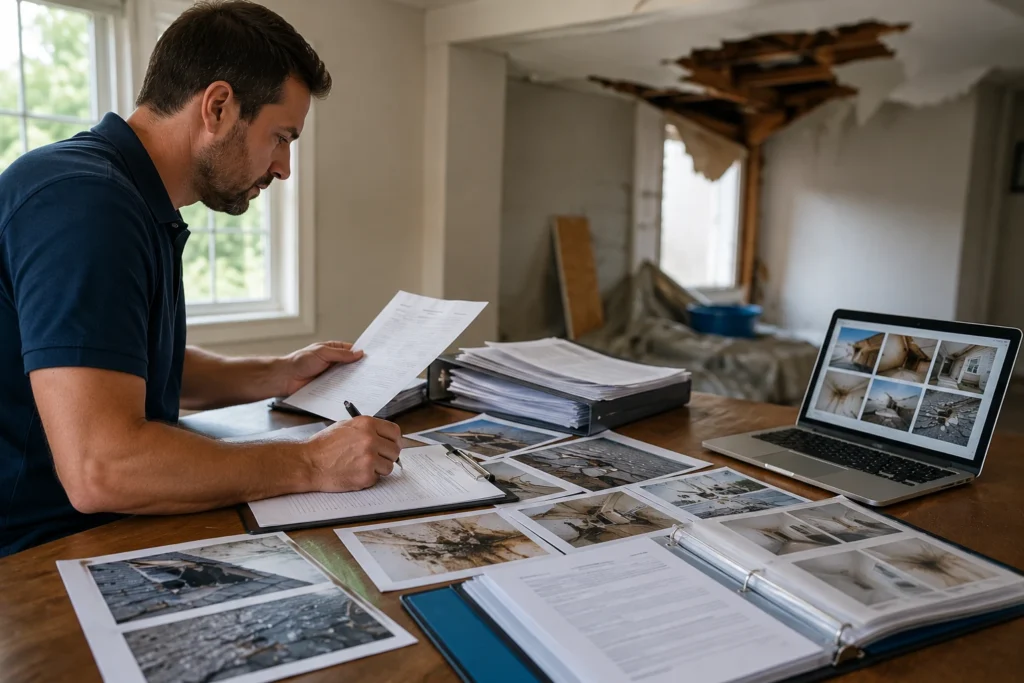
Many people imagine a second opinion involves simply comparing numbers. The process is usually far more detailed.
Step 1: Policy Review
Every claim starts with the policy. Coverage language determines what may or may not be recoverable. Reviewing the policy helps identify potential coverage opportunities.
Step 2: Estimate Analysis
The insurance company’s estimate is examined line by line.
Professionals look for:
- Missing items
- Quantity errors
- Pricing concerns
- Scope deficiencies
Step 3: Property Inspection
Physical inspections often reveal information that paperwork alone cannot provide.
Inspectors may identify:
- Hidden damage
- Secondary damage
- Code-related requirements
- Repair complexity factors
Step 4: Documentation
Evidence is gathered and organized.
This may include:
- Photographs
- Contractor reports
- Engineering opinions
- Moisture readings
- Repair estimates
Step 5: Comparative Analysis
The findings are compared against the carrier’s estimate. Differences are identified and documented. Only then can an informed decision be made.
What Professionals Look For During a Claim Review
A quality review goes far beyond obvious damage. Experienced reviewers often focus on issues property owners never consider.
Scope Errors
Scope refers to the work necessary to restore the property. Missing scope items are among the leading causes of underpayments.
Pricing Discrepancies
Construction costs change constantly. Labor shortages, material inflation, and regional pricing variations can affect repair costs significantly.
Building Code Requirements
Modern codes may require upgrades during repairs. Those costs can sometimes be covered depending on policy provisions.
Matching Issues
Matching disputes occur when replacement materials no longer exist.
Examples include:
- Roofing materials
- Flooring
- Siding
- Cabinets
A partial repair may not restore a reasonably consistent appearance.
Hidden Damage
Some damage remains concealed until repairs begin.
Examples include:
- Moisture behind walls
- Structural deterioration
- Electrical damage
- Smoke contamination
Failing to account for hidden damage can dramatically reduce settlement accuracy.
Second Opinion Versus Filing a New Claim
Many property owners misunderstand this distinction. A second opinion does not create a new claim. Instead, it evaluates an existing claim. The purpose is to determine whether the original assessment accurately reflects the loss. In many cases, the review simply identifies opportunities for supplemental documentation or further discussion. The claim itself remains the same.
Second Opinion vs Public Adjuster
These concepts are related but not identical.
A Second Opinion
A second opinion focuses on evaluating the existing claim and identifying concerns.
A Public Adjuster
A public adjuster represents the policyholder during the claim process.
Their role often includes:
- Damage documentation
- Claim preparation
- Negotiation
- Settlement advocacy
Many property owners researching claim disputes eventually come across discussions about The Truth About Public Adjusters and how independent representation differs from insurance company representation. Understanding those distinctions helps owners make informed decisions regarding claim assistance.
According to Wikipedia’s discussion of Epistemology, knowledge is strengthened through examination and verification. The same principle applies to insurance claims. Independent verification often leads to a more complete understanding of the true scope of loss.
How a Second Opinion Can Increase Claim Settlements
Not every review results in a larger settlement. Many do. The reason is simple. Additional information creates additional opportunities.
Identifying Missed Damage
When overlooked damage is documented, claim values may increase. Missed damage is surprisingly common, especially after widespread storms where adjusters are inspecting dozens of properties each week. Roof systems, gutters, windows, siding, fences, and interior finishes can all be affected by the same weather event. If only part of that damage is included in the original estimate, the settlement may not reflect the true cost of restoration. A second opinion helps ensure every damaged component receives proper consideration.
Correcting Measurement Errors
A small measurement discrepancy can affect:
- Roofing quantities
- Flooring quantities
- Paint calculations
- Material requirements
Those differences add up quickly. An estimate that is short by only a few roofing squares or a few hundred square feet of flooring can create thousands of dollars in funding gaps.
Updating Pricing
Construction markets fluctuate. Material costs rise. Labor costs rise. Permit fees change. Supply chain disruptions occur. A pricing review may identify discrepancies between approved amounts and current repair costs. When estimates rely on outdated pricing assumptions, property owners may struggle to find contractors willing to perform the work for the approved amount.
Supporting Supplemental Claims
Additional findings often support supplemental claim submissions.
These supplements can address:
- Hidden damage
- Additional repairs
- Code upgrades
- Newly discovered conditions
Many successful supplemental claims begin with an independent review that uncovers information missing from the original evaluation.
Strengthening Negotiations
Strong documentation creates leverage. Objective evidence is far more persuasive than opinions. When contractors, engineers, photographs, measurements, and reports all support the same conclusion, discussions with insurers become much more productive.
Real-World Reasons Insurance Claims Become Underpaid
Many policyholders assume that underpaid claims happen because someone intentionally overlooked damage. Sometimes that is true. Often, however, the explanation is much simpler. Insurance claims involve a tremendous amount of information. Measurements must be taken. Materials must be identified. Labor requirements must be calculated. Policy provisions must be reviewed. Damage must be connected to a covered cause of loss.
A mistake in any one of those areas can affect the final settlement. Consider a roof damaged during a severe windstorm. The adjuster may identify damaged shingles but fail to recognize damage to underlayment, flashing, ridge vents, or drip edge components. Individually, these omissions may appear minor. Together, they can represent thousands of dollars in additional repair costs. The same issue occurs with interior claims. Water damage may appear limited to a ceiling stain. Once repairs begin, contractors may discover wet insulation, damaged framing, electrical concerns, or moisture trapped inside wall cavities.
Those conditions increase restoration costs dramatically. This is one reason experienced contractors frequently disagree with initial insurance estimates. They are often evaluating the property from a repair perspective rather than a claims perspective. That difference matters. A second opinion creates an opportunity to compare those viewpoints and determine whether important items have been overlooked.
The Role of Documentation in Claim Success
Documentation is one of the most powerful tools available to policyholders. Unfortunately, many people underestimate its importance. Insurance companies make decisions based on evidence. The stronger the evidence, the stronger the claim. When seeking a second opinion, gathering documentation ahead of time can significantly improve the review process.
Helpful documents include:
- Insurance policies
- Claim correspondence
- Insurance estimates
- Contractor estimates
- Engineering reports
- Repair invoices
- Inspection reports
- Photographs and videos
- Temporary repair receipts
The goal is to create a complete picture of the loss. Imagine trying to solve a puzzle with half the pieces missing. That is essentially what happens when claim reviewers lack supporting documentation. The more complete the file, the easier it becomes to identify inconsistencies, omissions, and opportunities for additional recovery.
Why Contractors and Insurance Estimates Often Differ
One of the most common questions property owners ask is simple: “Why is my contractor’s estimate so much higher than the insurance company’s estimate?” There are several reasons. First, contractors focus on performing the work. Insurance adjusters focus on estimating the work. Those perspectives are not always identical.
Contractors frequently account for factors such as:
- Material availability
- Labor shortages
- Job complexity
- Site access challenges
- Safety requirements
- Permit costs
- Waste removal
Insurance estimates may not always include every one of those considerations. Second, local market conditions matter. Construction pricing fluctuates constantly. Material costs can change within weeks. Labor rates can vary substantially between regions.
For example, a pricing database may suggest one labor rate while actual contractors operating in Corsicana are charging considerably more due to current market conditions. When that occurs, property owners may discover that approved claim funds are insufficient to complete repairs. A second opinion helps determine whether the estimate reflects real-world repair costs rather than theoretical pricing assumptions.
Hidden Damage: The Silent Settlement Killer
Hidden damage is one of the leading reasons insurance claims become disputed. The challenge is obvious. You cannot evaluate what you cannot see. After a storm, a roof may appear relatively intact from the ground. Yet beneath the surface, damage may exist that compromises the entire roofing system. Similarly, water losses often create concealed conditions that remain undiscovered until demolition begins.
Examples include:
| Hidden Damage Type | Potential Consequence |
| Wet insulation | Reduced energy efficiency |
| Structural moisture | Wood deterioration |
| Mold growth | Additional remediation costs |
| Electrical exposure | Safety hazards |
| Smoke contamination | Lingering odors and damage |
Property owners who accept settlements before hidden damage is identified may find themselves responsible for unexpected expenses later. That is why comprehensive inspections are so valuable. They reduce surprises. And in the insurance world, fewer surprises usually mean better outcomes.
Large Loss Claims Require Greater Scrutiny
The larger the claim, the greater the need for careful review. Small errors on a $5,000 claim may not dramatically affect recovery. The same error on a $250,000 claim can have enormous financial consequences.
Large-loss claims often involve:
- Multiple contractors
- Engineers
- Restoration companies
- Building consultants
- Municipal inspections
- Code compliance requirements
The complexity increases significantly. As complexity increases, so does the potential for disagreement. Many large-loss settlements evolve over months rather than weeks. Additional inspections occur. Supplemental findings emerge.
Repair plans change. For this reason, obtaining a Second Opinion for Insurance Claims is often especially valuable when major structural damage is involved. The financial stakes simply justify a more detailed review.
Understanding Supplemental Claims
Many policyholders believe that once an insurance company issues payment, the claim is over. That is not always true. Supplemental claims exist because additional damage is frequently discovered after repairs begin. A supplemental claim requests consideration for damages that were not included in the original estimate.
Common examples include:
- Hidden structural damage
- Additional water intrusion
- Electrical repairs
- Code upgrades
- Material matching issues
- Newly discovered smoke contamination
Supplements are common in both residential and commercial claims. In fact, many experienced contractors expect supplements on larger projects because hidden conditions are so frequently uncovered during the repair process. A quality second opinion often identifies supplemental opportunities before repair work begins. That proactive approach can reduce delays and improve claim efficiency.
What Happens If the Insurance Company Disagrees?
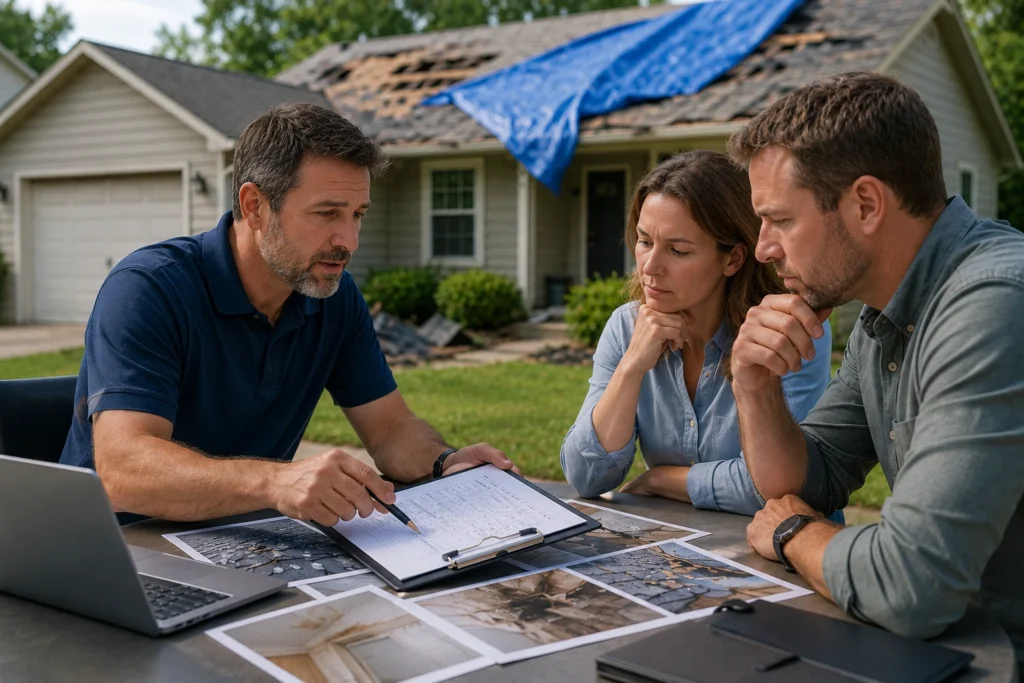
Disagreements are not unusual. Fortunately, policyholders often have options.
Additional Documentation
Further evidence may help resolve differences.
Examples include:
- Contractor reports
- Engineering findings
- Expert evaluations
Reinspection Requests
Many claims are reconsidered after supplemental inspections. Fresh eyes sometimes produce different conclusions.
Appraisal
Some policies contain appraisal provisions designed to resolve disputes regarding the amount of loss. Appraisal can provide a structured path toward resolution when negotiations stall.
Legal Review
In certain situations, legal consultation may be appropriate. However, most claim disagreements are resolved before reaching that stage.
Why Local Knowledge Matters in Corsicana Insurance Claims
Local experience matters more than many people realize. Construction costs vary. Weather patterns vary. Repair challenges vary. Property owners in Corsicana face weather-related risks that can create unique claim issues. Strong thunderstorms, hail events, high winds, and heavy rain can affect homes and commercial properties throughout the area.
A professional familiar with Corsicana understands:
- Local construction practices
- Regional contractor pricing
- Common storm damage patterns
- Repair market conditions
That knowledge can be valuable when evaluating settlement adequacy. For example, repair costs that might seem reasonable in another market may not accurately reflect current conditions in Corsicana. Local expertise helps ensure estimates reflect reality rather than assumptions.
Why Business Owners Should Never Skip a Second Opinion
Commercial property claims involve challenges that many residential claims never encounter. A business owner may face direct property damage while simultaneously dealing with operational disruptions. Revenue can decline. Customers may be affected. Employees may be displaced. Equipment may become unusable.
The financial impact often extends far beyond physical repairs. Business interruption losses can be particularly complicated. Calculating lost income requires detailed analysis of financial records, operational history, and future projections. Mistakes in these calculations can significantly affect settlement amounts. For that reason, commercial policyholders often benefit greatly from independent claim reviews. The potential recovery differences can be substantial.
Common Mistakes Property Owners Make
Many claim problems are preventable. Here are some of the most common mistakes.
Accepting the First Offer Too Quickly
The first offer is not always the final offer. Review it carefully.
Failing to Obtain Contractor Estimates
Independent estimates provide valuable comparison points. Without them, it is difficult to evaluate settlement accuracy.
Not Reading the Policy
Coverage details matter. Policy language often determines claim outcomes.
Ignoring Supplemental Damage
Additional damage frequently appears during repairs. Document it immediately.
Waiting Too Long
Most policies contain deadlines. Delays can complicate claim recovery efforts.
Practical Steps to Take Before Accepting Any Settlement
Before signing anything, consider the following checklist:
Review Your Estimate Carefully
Look beyond the total amount. Examine the details.
Compare Contractor Bids
Gather multiple professional opinions.
Photograph Everything
Maintain a complete visual record.
Ask Questions
If something seems unclear, request clarification.
Seek Independent Review
A second opinion provides additional confidence before making a final decision.
The Long-Term Value of a Thorough Review
A second opinion is not simply about obtaining more money. It is about making informed decisions. Sometimes the review confirms that the insurance company’s estimate is accurate. That is valuable information. Other times, the review identifies substantial discrepancies. That information is equally valuable. Either outcome provides clarity.
And clarity allows property owners to move forward with confidence. When major repairs, business operations, property values, and financial recovery are at stake, confidence matters. A thorough review helps ensure decisions are based on facts rather than assumptions. That is ultimately what a Second Opinion for Insurance Claims is designed to accomplish. It gives property owners the information they need to protect their investment, understand their options, and pursue the most accurate claim resolution possible.
Conclusion
Insurance claims can be complicated. Repair costs can be substantial. And settlement decisions often have long-term financial consequences. That is why obtaining a Second Opinion for Insurance Claims can be one of the most valuable steps a property owner takes before accepting a settlement.
The process is not about creating conflict. It is about ensuring accuracy. For homeowners and business owners in Corsicana, a professional claim review can uncover missed damage, identify valuation concerns, strengthen documentation, and provide a clearer understanding of the true cost of recovery.
Before accepting an insurance company’s estimate, take the time to verify that it fully reflects your loss. A second opinion may confirm the settlement is fair. Or it may reveal opportunities that significantly improve your claim outcome. Either way, you will make your decision with confidence and that alone makes the process worthwhile.
FAQs
A second opinion is an independent review of your insurance claim, damage assessment, and settlement offer to determine whether the estimate is accurate and complete.
You should consider a second opinion if your settlement seems low, damage appears missing, or your contractor’s estimate is significantly higher than the insurance company’s estimate.
Yes. A second opinion may identify overlooked damage, pricing errors, or missing repairs that could support additional compensation.
Not necessarily. A second opinion simply reviews the existing claim and may provide evidence for supplemental payments or further negotiations.
Roof, hail, wind, water, fire, smoke, and commercial property claims often benefit because they frequently involve hidden damage or valuation disputes.
The timeline varies depending on the size and complexity of the loss, but many reviews can begin shortly after documentation is collected.
Yes. In many situations, additional damage discovered after payment may qualify for supplemental consideration under the claim.
Helpful documents include your insurance policy, claim estimate, photos, contractor bids, correspondence, and any inspection reports.
No. A second opinion evaluates the claim, while a public adjuster may actively represent and negotiate on behalf of the policyholder.
Local professionals understand regional weather patterns, construction practices, and repair costs, which can help produce a more accurate claim evaluation.