
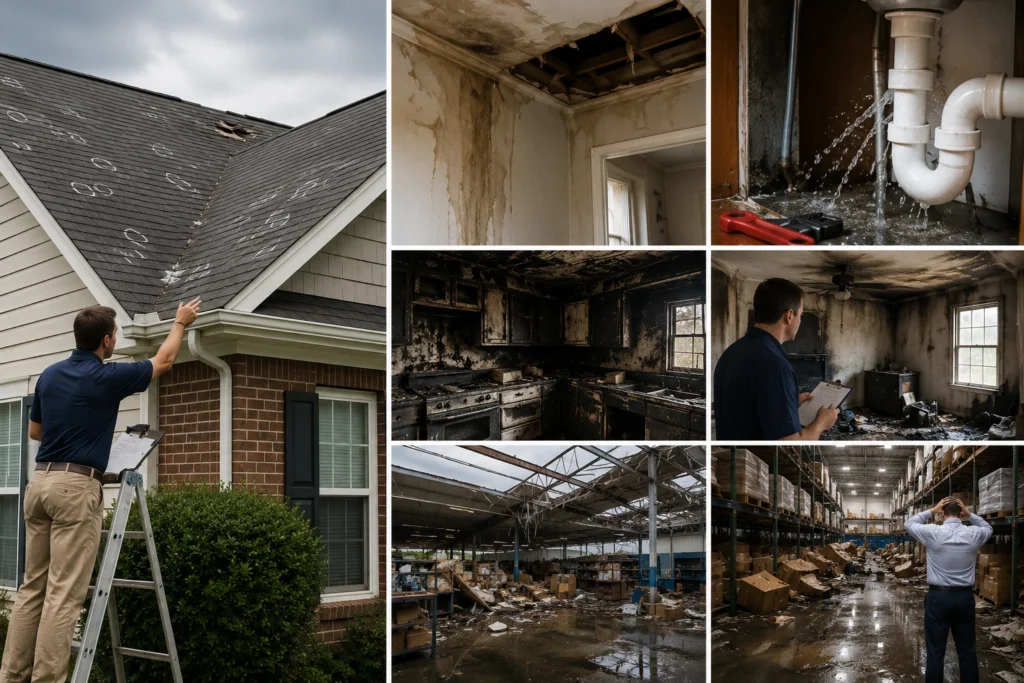
Few letters are more frustrating than an insurance claim denial. You report damage. You cooperate with the inspection. You provide photographs. You answer questions. Then the insurance company sends a letter stating that your claim has been denied. It feels personal. It feels unfair. And it can leave homeowners wondering what comes next. If you are searching for What to Do If Insurance Denies Your Claim, the most important thing to understand is that a denial does not always mean the process is over. Many denied claims are successfully reopened, reconsidered, negotiated, or overturned after additional evidence is presented.
Homeowners and business owners in Corsicana face many of the same challenges seen throughout Texas. Storm damage disputes, water damage disagreements, fire losses, and roofing claims often become points of contention between policyholders and insurance carriers. The good news? You have options. The key is knowing what steps to take, what mistakes to avoid, and how to build the strongest possible case after receiving a denial. This guide provides a detailed roadmap for navigating the process and protecting your interests when an insurance company says no.
Understanding Insurance Claim Denials
Before responding to a denial, it helps to understand what it actually means. An insurance claim denial occurs when the carrier determines that all or part of a reported loss is not covered under the policy. However, not every denial is the same.
Some claims are denied entirely. Others are only partially denied. Some claims are approved but significantly underpaid, leaving property owners responsible for major out-of-pocket expenses. While each situation is different, the impact can be substantial.
Why Insurance Companies Deny Claims
Insurance carriers typically cite specific reasons for denying coverage.
Common examples include:
- Policy exclusions
- Wear and tear allegations
- Deferred maintenance
- Late reporting
- Lack of documentation
- Disputed cause of loss
- Coverage limitations
- Misinterpretation of policy language
Sometimes the denial is appropriate. Sometimes it is not. The challenge for policyholders is determining whether the insurer’s position is supported by the facts and policy language. That requires investigation.
Why Denied Claims Can Become Expensive
Property damage rarely improves with time. A roof leak becomes interior damage. Interior damage becomes mold. Minor structural concerns become larger repair projects. A denied claim often creates a financial burden that extends far beyond the original loss.
Consider the potential consequences:
| Damage Type | Potential Consequence |
| Roof Damage | Water intrusion and interior repairs |
| Plumbing Failure | Mold growth and flooring damage |
| Fire Damage | Structural deterioration |
| Storm Damage | Increased exposure to weather |
| Commercial Property Damage | Business interruption losses |
The longer repairs are delayed, the more expensive recovery often becomes. That is why prompt action matters.
Common Reasons Homeowners in Corsicana Receive Claim Denials
Understanding why claims are denied can help identify weaknesses in the insurer’s position.
Storm Damage Disputes
Texas storms are powerful. High winds, hail, and severe weather regularly impact properties throughout Corsicana. Yet storm claims are among the most disputed insurance claims.
Common denial arguments include:
- Damage was cosmetic
- Damage existed before the storm
- Damage resulted from age
- Wind speeds were insufficient
- Roof deterioration caused the problem
Insurance companies often rely on inspection findings to support these conclusions. The problem is that inspections are not always perfect. Missed damage happens. Incomplete inspections happen. Incorrect conclusions happen.
Water Damage Claims
Water claims are another major source of disputes. Insurance companies frequently distinguish between sudden damage and long-term deterioration.
For example:
- Burst pipe = often covered
- Long-term leak = often disputed
Determining the true cause requires careful investigation.
Without strong documentation, insurers may argue that maintenance issues caused the damage.
Fire and Smoke Damage
Fire claims can be complex.
Beyond structural damage, disputes may arise regarding:
- Smoke contamination
- Personal property losses
- Cleaning requirements
- Restoration methods
- Cause and origin findings
Because fire losses often involve large dollar amounts, investigations tend to be extensive.
Business Property Claims
Commercial claims frequently involve:
- Equipment losses
- Inventory damage
- Income interruption
- Extra expense claims
Documentation becomes especially important in these situations.
Step One: Read the Denial Letter Carefully
Many policyholders immediately focus on the denial itself. That reaction is understandable. However, the denial letter contains critical information. Read every page carefully. Then read it again.
Pay attention to:
- Claim number
- Date of denial
- Policy provisions cited
- Explanation of denial
- Appeal procedures
- Response deadlines
Create a dedicated claim file.
Store every document in one location.
This includes:
- Emails
- Letters
- Inspection reports
- Photographs
- Estimates
- Notes from conversations
Organization may not seem important now. Later, it can make a tremendous difference.
Step Two: Review Your Insurance Policy
Insurance policies are contracts. The denial should be evaluated against the policy language itself. Start with the declarations page.
Review:
Coverage Limits
Understand what coverage was purchased.
Covered Causes of Loss
Determine whether the reported damage falls within covered events.
Exclusions
Many denials rely heavily on exclusions. Read these sections carefully.
Conditions
Policies contain obligations for policyholders. Understanding these requirements is essential.
Endorsements
Endorsements can significantly modify coverage. Never assume the standard policy language applies without reviewing all endorsements. A detailed policy review often reveals opportunities that policyholders initially overlook.
Step Three: Gather Supporting Evidence
Evidence drives claim outcomes. Strong evidence creates leverage. Weak evidence creates uncertainty. Your objective is simple: Build the strongest factual case possible.
Photographic Documentation
Photographs often become the foundation of successful disputes. Capture:
- Overall property views
- Damage close-ups
- Interior damage
- Exterior damage
- Multiple angles
- Date-stamped images when possible
The more comprehensive the documentation, the stronger the presentation.
Video Evidence
Video can provide additional context. Slowly document:
- Roof conditions
- Water intrusion
- Structural concerns
- Personal property damage
Contractor Reports
Independent inspections can provide valuable support. Potential experts include:
- Roofing contractors
- Engineers
- Restoration specialists
- Building consultants
Their findings may identify issues overlooked during the original inspection.
Repair Estimates
Multiple estimates often create a clearer picture of actual repair costs. One estimate tells a story. Several estimates help validate it.
Step Four: Request Your Complete Claim File

Many policyholders never ask for their claim file. That is a mistake. The claim file often contains valuable information.
It may include:
- Adjuster notes
- Inspection reports
- Internal estimates
- Engineering reports
- Photographs
- Correspondence
Reviewing this information can reveal weaknesses in the denial.
For example:
- Damage documented but omitted
- Incomplete inspections
- Conflicting observations
- Missing photographs
- Unsupported conclusions
The more information you have, the better positioned you are to challenge questionable findings.
Step Five: Request a Reinspection
A reinspection may be appropriate when:
- New evidence exists
- Damage was missed
- Additional experts have evaluated the property
- Important information was unavailable initially
Preparation matters.
Before the inspection:
- Organize documents
- Prepare photographs
- Create damage summaries
- Highlight disputed areas
Do not assume the adjuster will discover every concern independently. Guide the process with facts and documentation.
Step Six: File a Formal Appeal
Most insurance companies provide a process for appealing claim decisions. Use it. An appeal should be professional, organized, and evidence-driven. Avoid emotional arguments. Focus on facts.
Include the Following
- Policy number
- Claim number
- Date of loss
- Explanation of disagreement
- Supporting documents
- Expert reports
- Photographs
- Relevant policy language
A strong appeal clearly explains why the denial should be reconsidered.
Keep Detailed Records
Document every interaction.
Track:
- Phone calls
- Emails
- Letters
- Meetings
If a dispute escalates, these records can become extremely important.
Building a Strong Appeal Strategy
Many policyholders submit appeals too quickly. They react emotionally. That is understandable, but strategy matters. Instead of immediately responding, take time to build a comprehensive package.
Ask yourself:
- What evidence supports my position?
- What evidence supports the insurer’s position?
- What questions remain unanswered?
- What experts should be consulted?
Approaching the process strategically often improves outcomes. Remember, the goal is not simply to disagree. The goal is to demonstrate why the denial is unsupported by the facts or policy language.
Step Seven: Hire a Public Adjuster
This is often one of the most effective options available to policyholders. Public adjusters represent policyholders, not insurance companies. That distinction matters. Insurance company adjusters work for the insurer. Public adjusters work for the property owner.
What Public Adjusters Do
Their responsibilities often include:
- Reviewing policies
- Documenting damage
- Preparing estimates
- Evaluating claim value
- Negotiating settlements
- Managing communication
Public Adjuster vs Insurance Adjuster
| Insurance Company Adjuster | Public Adjuster |
| Works for insurer | Works for policyholder |
| Evaluates claim for carrier | Evaluates claim independently |
| Represents company interests | Represents client interests |
| Determines carrier position | Advocates for policyholder |
Many homeowners researching What to Do If Insurance Denies Your Claim discover that professional representation can significantly improve claim preparation and negotiations.
Understanding When to Hire a Public Adjuster can be especially important after a denial because experienced claim professionals often identify overlooked damage, missing documentation, and policy interpretation issues that may strengthen the policyholder’s position. This can be particularly valuable in Corsicana, where severe storms frequently create complicated roofing and property damage claims.
Step Eight: Consider Alternative Dispute Resolution
Not every dispute belongs in court. Several alternatives may help resolve disagreements more efficiently.
Insurance Appraisal
Appraisal is commonly used when both parties agree damage exists but disagree on value.
The process usually involves:
- Policyholder-selected appraiser
- Insurer-selected appraiser
- Neutral umpire
The panel evaluates the dispute and determines an appropriate valuation.
Mediation
Mediation involves a neutral third party facilitating discussions. Unlike a judge, the mediator does not decide the outcome. Instead, the mediator helps both sides work toward a resolution. Many claim disputes settle through mediation.
Arbitration
Some disputes may involve alternative processes such as Arbitration, which can provide another avenue for resolving disagreements outside traditional litigation. Understanding available dispute-resolution options can significantly expand a policyholder’s choices.
Step Nine: Contact Regulatory Agencies
Insurance companies are regulated. When concerns arise regarding claim handling, policyholders may have the option to file complaints with regulatory authorities.
A complaint typically requires:
- Claim information
- Policy information
- Correspondence
- Denial letters
- Supporting documentation
Regulators generally cannot force settlements. However, they can review claim-handling concerns and ensure carriers comply with applicable requirements.
Step Ten: Consult an Insurance Attorney
Some disputes require legal guidance.
Potential warning signs include:
- Large financial losses
- Repeated denials
- Significant delays
- Coverage disputes
- Potential bad-faith concerns
An attorney can evaluate the claim, review policy language, and explain available legal options. Not every denied claim requires litigation. Some do. Knowing the difference is important.
Mistakes to Avoid After a Denial
The actions taken after a denial can significantly influence the outcome. Avoid these common mistakes.
Assuming the Denial Is Final
Many successful claims began with a denial. Never assume the process is over.
Missing Deadlines
Appeals often have deadlines. Missing them may limit available options.
Throwing Away Evidence
Damaged materials can become valuable evidence. Preserve them whenever possible.
Failing to Seek Independent Opinions
Independent inspections often reveal issues that initial inspections missed.
Poor Documentation
Memories fade. Documents remain. Keep records of everything.
Becoming Confrontational
Frustration is understandable. However, professional communication is usually more effective than emotional arguments.
Real-World Example: A Denied Storm Damage Claim

Consider a hypothetical scenario. A homeowner in Corsicana experiences a significant hailstorm. The roof sustains visible impacts. A claim is filed. The insurance company inspects the property and concludes the roof damage resulted primarily from aging and normal wear. Coverage is denied. At this point, many homeowners would stop. This homeowner did not.
An independent roofing contractor was hired. The contractor documented fresh hail impacts across multiple slopes. Weather reports confirmed severe hail activity. Additional photographs were gathered. A detailed report was submitted. The insurer agreed to a reinspection. Following the second review, the claim was reopened. Coverage was approved. Repairs moved forward. What changed? Evidence. The denial was challenged with facts rather than assumptions.
How Public Adjusters Help Reverse Denied Claims
Denied claims often require more than photographs. They require organization. Analysis. Strategy. Public adjusters help by creating a comprehensive claim presentation.
Damage Documentation
Detailed inventories strengthen claims.
Policy Review
Coverage issues are evaluated carefully.
Estimate Preparation
Accurate repair costs are documented.
Negotiation Support
Communication with insurers becomes more structured.
Claim Management
Deadlines, documents, and responses are coordinated efficiently.
For many policyholders, this support provides peace of mind during a stressful process.
The Importance of Persistence
Insurance claim disputes are rarely resolved overnight. Patience matters. Persistence matters. Preparation matters. Some claims require multiple inspections. Others require appeals. Some require mediation, appraisal, or legal consultation. The property owners who often achieve the strongest outcomes are those who remain engaged throughout the process. They ask questions. They gather evidence. They seek professional guidance when necessary. Most importantly, they do not assume the first answer is the final answer.
Final Thoughts
Receiving a denial letter can feel overwhelming. However, understanding What to Do If Insurance Denies Your Claim provides a roadmap forward. A denial does not automatically mean coverage is impossible. It means additional evaluation may be necessary. Review the denial carefully. Study the policy. Gather evidence. Request the claim file.
Seek independent opinions. Consider professional representation. Explore dispute-resolution options. And remain proactive throughout the process. For homeowners and business owners in Corsicana, these steps can make the difference between accepting a denial and pursuing a fair resolution.
The insurance claim process can be challenging. But knowledge, preparation, and persistence often create opportunities that initially seem impossible. When a denial arrives, do not view it as the end of the story. View it as the beginning of your next move.
FAQs
Yes. Most insurance companies have an appeal process that allows you to submit additional evidence and request a review of the decision.
The timeframe varies by insurer and policy, so review your denial letter and policy documents carefully for applicable deadlines.
Common reasons include policy exclusions, insufficient documentation, late reporting, and disputes over the cause of damage.
A public adjuster may be helpful if the claim is large, complex, or involves disputed damage and coverage issues.
Yes. Many claims are reopened when new evidence, expert reports, or additional documentation become available.
Keep all claim-related records, including photographs, estimates, inspection reports, emails, letters, and denial notices.
Not necessarily, but a complaint can trigger a review of the insurer’s claim-handling practices and procedures.
You can obtain independent inspections from contractors, engineers, or other qualified experts to support your position.
No. A denial rejects coverage, while an underpaid claim provides compensation that may be insufficient to cover repairs.
Consider consulting an attorney if significant money is at stake, the denial appears unreasonable, or negotiations have stalled.